
Westmont College Psychology Programs
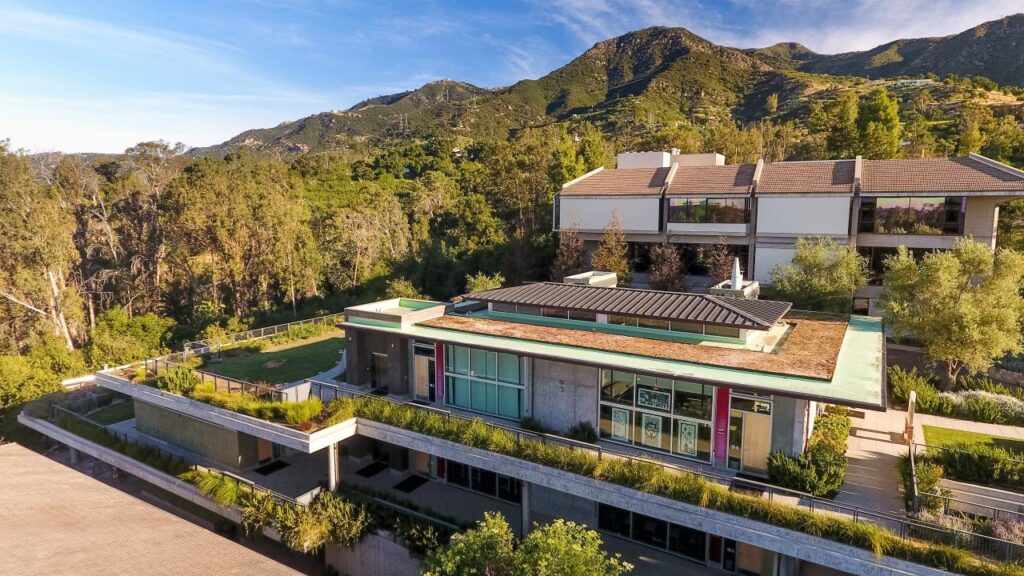
The Westmont College Psychology department beautifully blends scientific rigor with faith integration. Students receive an undergraduate education in scientific psychology that emphasizes both research and practical applications. The psychology program, housed in the state-of-the-art Winter Hall, ranks among the college’s strongest academic programs.
Student interest in psychology at Westmont continues to grow substantially. The Spring 2018 data showed 89 psychology majors, which made up 6.8% of all Westmont students and ranked as the third most popular major on campus. These numbers reflect the program’s excellence and the career paths it creates for graduates.
Winter Hall’s completion in 2011 changed how psychology students learn and interact. This 44,000 square foot facility earned LEED Gold certification and serves as home to psychology, physics, mathematics, and computer science departments. The building stands at the campus center, unlike the old and isolated Bauder Hall, and provides students with cutting-edge classrooms and labs. Some notable features include:
- Light-filled learning lounges that connect directly to outdoor plazas
- A central atrium that serves as a hub for movement and cross-disciplinary interaction
- Faculty offices with terrace doors opening right onto student lounges
The department’s dedicated faculty members bring a variety of expertise to their teaching. Fall 2018 statistics showed 4.33 full-time equivalent faculty positions, with three full-time and two two-thirds time tenure track faculty members. A half-time administrative assistant and a full-time laboratory coordinator support their work. Faculty members like Dr. Carmel Saad, who runs an active social psychology research program, illustrate the department’s dedication to teaching and research excellence.
Students here get remarkable hands-on experience. They can apply their knowledge through faculty-supervised research projects and present their work at academic conferences. Local internships are a great way to get real-life experience while exploring potential careers.
Psychology graduates from Westmont achieve notable success. Many alumni attend prominent graduate schools, and some receive prestigious recognition. These honors include clinical post-doctoral internships at Harvard Medical School and Ford Foundation Pre-doctoral Minority Fellowships. Graduates work in various roles – from clinical and counseling settings to schools, health services, and rehabilitation centers. Some specialize in neuropsychology, social psychology, or forensic psychology.
The Westmont psychology program stands out through its steadfast dedication to combining psychological knowledge with Christian faith traditions. This integration helps promote health and well-being in communities, churches, and throughout the world.
Programs offered
Westmont College’s psychology program prepares you for graduate studies and career opportunities through multiple degree paths. The department builds a strong foundation in psychological science while helping students connect their faith with psychological principles.
Students can choose from three psychology degree tracks that align with their career goals:
The Bachelor of Arts in Psychology is 48 units. The program has three basic lower-division courses: General Psychology, Introduction to Statistics, and Research Methods in Psychology with Lab. Students must finish these courses before junior year. The program needs 36 upper-division units that include History and Systems of Psychology, lab courses about biological and cognitive behavior bases, and courses about social and clinical psychology.
The Bachelor of Science in Psychology comes with two specialized tracks:
- The General Psychology Track needs 56 units. This track builds on the BA program’s psychology coursework and adds more science and math requirements. Students take one math course (Functions and Models, Elementary Calculus I or II, or Discrete Mathematics) and two courses from biology, chemistry, or physics.
- The Behavioral Neuroscience Track needs 64 units. This program combines psychology coursework with natural sciences training. Students must complete five additional courses: Elementary Calculus I, General Biology I and II, and General Chemistry I and II.
Students in all psychology programs can cap their studies through research or hands-on experience. Research-minded students can pick the Capstone Senior Research option or go for Major Honors. The Practicum option gives students experience, which helps those heading straight into jobs after graduation.
Psychology students at Westmont get many opportunities to grow. They can join Psi Chi (the International Honor Society in Psychology), work on summer research, and get funding for conferences. Top performers might earn the Willard F. Harley Outstanding Senior Award or the C. Eugene Walker Award for Outstanding Achievement in Psychology.
Our graduates often work in clinical or counseling roles. Career paths also lead to educational psychology, rehabilitation, industrial/organizational settings, neuropsychology, social psychology, and forensic psychology. Westmont psychology alumni consistently get into prominent graduate schools and succeed in their careers.
Online options
The psychology department at Westmont College takes a balanced approach to online education. The department doesn’t offer an online psychology bachelor’s degree program yet, but students can still access many online learning opportunities.
The 2019-2020 academic year brought big changes to online participation at Westmont College. The numbers tell an interesting story – 270 undergraduate students took at least one online class. This made up 22.02% of the total student body of 1,226. A smaller group of 78 students (6.36%) completed all their courses online. These numbers stand out because Westmont had zero online students between 2015 and 2019.
Psychology students can boost their learning through several online tools. The department’s Psychology Participation Pool lets students join various research studies. Students need to check this platform regularly as new studies pop up throughout the semester. Some studies happen completely online, while others need you to show up on campus.
Westmont also runs special online programs. Dr. Gurney leads a four-week online Marriage Bootcamp workshop that draws from 25 years of clinical work. Students learn about relationship dynamics, communication strategies, and ways to build deeper intimacy.
The Counseling and Psychological Services department now offers virtual workshops. These sessions cover anxiety, stress, depression, grief, body image, and eating disorders. Licensed mental health professionals run these drop-in sessions, and you don’t need to be an existing client to join.
Westmont gives students all the digital tools they need. Zoom works as the main platform for virtual meetings with full IT support through westmont.zoom.us. Canvas serves as the hub for course materials where professors link YouTube videos, PDFs, and schedule virtual sessions.
The psychology program stays mostly campus-based, but Westmont has built up its online resources. This shows the college’s dedication to flexible, available education while keeping its focus on community and personal interaction.
Accreditation
Your Westmont College psychology degree’s credibility stands on solid accreditation. Westmont is 60+ years old and has managed to keep its accreditation through the WASC Senior College and University Commission (WSCUC). Your degree meets strict educational excellence standards through this regional accreditation. WSCUC confirms that Westmont follows all quality requirements.
WSCUC regional accreditation brings real benefits to psychology students. You can apply for federal financial aid at Westmont. Credit transfers become easier if you switch schools. Many graduate schools prefer students from regionally accredited institutions, which boosts your chances after graduation.
Westmont completed its latest complete accreditation review in 2015-16. The Commission’s most recent action happened on November 15, 2022. Spring 2026 marks the next scheduled accreditation visit. This shows how quality standards stay consistent through regular evaluations.
Westmont has earned several specialized accreditations beyond its main institutional one:
- California Commission on Teacher Credentialing for teaching programs with elementary and secondary specializations
- National Association of Schools of Music for music programs
- Commission on Collegiate Nursing Education (CCNE) for the Accelerated Bachelors Degree in Nursing program
The college’s academic reputation grows stronger through its institutional memberships:
- Association of Independent California Colleges and Universities
- Council of Christian Colleges and Universities
- Christian College Consortium
- Annapolis Group of national liberal arts colleges
Psychology students benefit because accreditation confirms their curriculum meets industry standards in research methods, ethical practice, and educational quality. This matters especially when you apply for graduate programs or professional licenses, as state licensing boards often need degrees from accredited schools.
Westmont shows financial responsibility through its membership in the Evangelical Council for Financial Accountability (ECFA). This gives extra proof that the college runs honestly in everything it does.
These accreditations and memberships confirm your psychology education’s quality at Westmont College. Employers and graduate programs will respect your degree accordingly.
Admission Requirements
Getting into Westmont College’s Psychology program starts with knowing what they need from you. The college uses a selective admission process and ranks among the more competitive Christian liberal arts colleges.
You need to finish a detailed college-preparatory program with at least 14 academic units. The program needs four years of English, three years of science (two must be lab courses), three years of math (up to second-year algebra), two years of one foreign language (three years work better), and two years of social science. These core courses prepare you for the challenges of Westmont’s psychology curriculum.
Students can apply through Westmont’s own application or the Common App – both work equally well. Both options are free, which makes them available to everyone. The college suggests international students use the Common App.
Your application package must include one academic reference from a teacher of a major subject like English, Science, History, or Mathematics. You can also add a pastoral/character reference to make your application stronger. These references help admission staff assess your academic skills and character beyond your grades and test scores.
The college lets you decide whether to submit standardized test scores. They take SAT, ACT, or CLT scores if you choose to submit them. Students who submit scores show an average ACT composite of about 30, with half scoring between 30-36. The average SAT composite is 1296, and 37% of students score between 1400-1600.
Interviews aren’t required but they help admission counselors know you better than just your application materials. This personal connection matters even more for psychology program applicants since the field focuses on understanding people.
Different deadlines apply based on when you want to start and which decision plan you choose. Fall first-year students can pick Early Action I due October 15, Early Action II by November 1, or Regular Decision by January 15. Spring applicants should submit everything by November 15.
Westmont gives you $1,000 extra in aid if you visit campus for an official admissions tour. This gives you a chance to see the psychology department in person and get some financial help too.
Tuition
The financial investment for your psychology education at Westmont College depends on several key factors. The total direct costs for the 2025-2026 academic year reach $73,374 for students living on campus. This amount covers tuition ($54,430), housing ($10,450), meal plans ($7,200), and required fees that include health ($620), student activity ($354), and technology fees ($320).
Students who choose to live off-campus face direct costs of $55,724, which mainly includes tuition and fees. Westmont helps with off-campus expenses by providing allowances for housing ($9,675) and food ($3,600). This brings the total cost of attendance to $73,349.
Psychology students should set aside about $1,600 each year for books, course materials, and supplies. These educational material costs place Westmont among the top 30% nationally.
Westmont stands among the more expensive private institutions. The total costs rank in the top 15% nationwide, compared to the national average of $54,501 for private non-profit four-year colleges.
The good news is that financial help is readily available. Over the last several years, 95% of Westmont students have received financial aid, with average awards reaching $32,414 per year. Students can access various aid options:
- Federal Pell Grants help students with exceptional financial need
- Cal Grant A provides support specifically for tuition expenses
- Federal Supplemental Educational Opportunity Grants are available based on financial need
- Parent PLUS loans can help you cover all attendance costs
Students must pay their fees by August 15 for fall semester and December 15 for spring semester. A $150 fee applies to late payments, and unpaid balances accrue monthly finance charges at 10% per year.
Campus visits come with additional financial benefits. Prospective students who visit campus can receive up to $2,000 in renewable annual aid, which adds up to $8,000 over four years. Psychology students might also qualify for the ApplyBoard Exclusive Scholarship worth $5,000.
Your actual cost will likely be much lower than the initial price tag once you factor in these financial aid options.
Additional Information
Westmont College Psychology graduates achieve remarkable career success after graduation. 97% of Westmont graduates start working or pursue graduate studies within six months. The class of 2022 showed strong results – 94.3% of graduates found jobs, entered graduate school, joined service programs, or served in the military. These results come from the detailed career preparation students receive.
The Career Resource Center guides students throughout their Westmont journey to help them discover their talents and choose meaningful careers. Psychology graduates get accepted into top graduate schools like Stanford, Harvard, Yale, Princeton, UC Berkeley, Johns Hopkins, Cornell, Dartmouth, and Caltech.
Students can earn recognition through multiple channels. The program offers Psi Chi membership (International Honor Society in Psychology), Major Honors, the Willard F. Harley Outstanding Senior Award, and the C. Eugene Walker Award. Students can also join summer research projects with stipends and housing support, and get funding to present their research at conferences.
The program’s strength shows in its recent graduates’ achievements. Alumni have landed prestigious roles, including clinical post-doctoral internships at Harvard Medical School and Ford Foundation Pre-doctoral Minority Fellowships. Valerie Swisher (2022) completed a Fulbright Fellowship in Hungary and earned a National Science Foundation Graduate Research Fellowship to pursue her PhD at Penn State.
Westmont’s Alumni Office connects graduates through regional events that help maintain strong networks after graduation.