
University of San Diego Psychology Programs
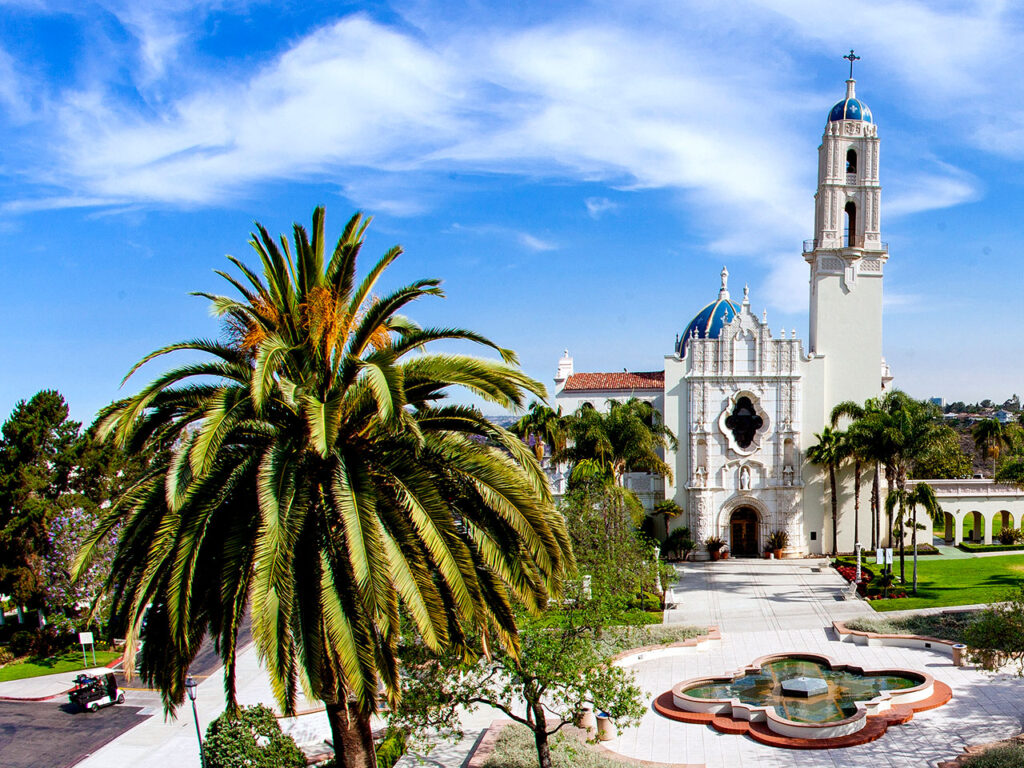
The University of San Diego’s Department of Psychological Sciences creates an outstanding academic setting. Students study human and animal behavior scientifically through a liberal arts perspective. Small classes and faculty mentorship help students understand psychology as both a science and a profession.
USD’s psychology program stands strong nationally. It ranks in the top 15% of all colleges and universities across the country at #136, and #15 in California. These rankings showcase the department’s excellence in education. The program awarded 123 bachelor’s degrees in general psychology during 2021-2022, showing a 23% increase from the previous year.
Psychology graduates from USD see strong financial results. Their median salary reaches $35,595, which beats the national average of $31,484 for psychology graduates. This difference shows how well the program prepares students for competitive jobs.
The psychology department covers many core areas like clinical, developmental, social, cognitive, and biological psychology. Students learn both theory and get hands-on experience to test these concepts. The department’s research facilities let students work together with faculty on meaningful projects.
Students can present their research on campus and at conferences. They might even get published alongside faculty members. These opportunities become especially valuable when students plan to pursue graduate studies or research careers.
Department Chair Tammy Dwyer, PhD, and Program Director Anne Koenig, PhD lead a talented faculty team. The core team consists of professors, associate professors, assistant professors, lecturers, and emeritus faculty. Students learn from educators with different expertise and specializations.
USD’s program builds a strong foundation for many career paths beyond graduate school in psychology. Graduates succeed in neuroscience, law and criminal justice, education, medicine, business, human resources, ministry, and social work.
The psychology department’s methods line up with USD’s educational goals. Students get solid academic training while developing professional skills. This balanced approach creates graduates who understand psychology’s principles and have practical skills that work in many professional settings.
Programs offered
USD’s psychology programs prepare students for many professional paths. Students can choose from undergraduate to doctoral studies that combine theory with real-world applications to create a detailed educational experience.
Students learn psychology principles through a liberal arts framework at the undergraduate level. The program covers clinical, developmental, social, cognitive, and biological sub-disciplines. Students can pick either a major or minor in psychology based on their career goals.
USD has earned recognition as one of the region’s most detailed psychology programs. Students benefit from a flexible curriculum that matches their interests. The psychology major builds a strong foundation in core principles and lets students specialize in different subfields. The minor focuses on basic concepts with elective course options.
The University of South Dakota runs the state’s largest graduate psychology program. Graduate students can pursue:
- Master of Arts (M.A.) in Psychology with specializations in either Human Factors or Clinical Psychology
- Doctoral (Ph.D.) programs in Human Factors or Clinical Psychology
- Combined Clinical/Disaster Psychology specialization (requiring an additional 12 credit hours beyond the standard doctoral requirements)
USD gives students a chance to combine disciplines through its concurrent degree option. Law school students with enough psychology credits can join the Board of Regents authorized program to earn both a J.D. and an M.A. in Psychology.
The department’s Disaster Mental Health Institute is the region’s only facility of its kind. This resource strengthens research capabilities and helps students gain specialized training in disaster psychology and trauma response.
USD psychology graduates develop skills that open doors to various career paths. They qualify for graduate schools or careers in neuroscience, law, criminal justice, education, medicine, business, human resources, ministry, and social work.
The department’s dozen research labs and mental health clinic give students exceptional resources. These facilities help students gain both theoretical knowledge and hands-on experience in their chosen field.
Online options
USD psychology programs give students plenty of choices with their online and hybrid options. These options work well with different learning priorities and life situations. The university has created these alternatives to keep high academic standards while making quality education available to everyone.
The Human Development and Education Psychology master’s degree shows how flexible these programs can be. Students need 33 credit hours and can choose between thesis and non-thesis plans through online, hybrid, and on-campus formats. Most core courses use a hybrid model, though students can take some courses online. They can also pick online or on-campus options for their emphasis area and elective courses.
USD’s Disaster Mental Health Graduate Certificate stands out as a unique offering. The university’s Disaster Mental Health Institute (DMHI) has offered this program completely online since 1997. This 12-credit program helps mental health professionals support communities during disasters, terrorist attacks, and public health emergencies. Students worldwide can access this certificate thanks to its online format.
USD leads South Dakota with its largest online student population. This shows how dedicated the university is to bringing education beyond campus walls. Students pay the same tuition whatever their location—out-of-state students don’t pay more than in-state residents.
USD’s online learning experience helps students succeed with:
- Small student-faculty ratio (18:1) that creates better instructor interaction
- Weekly study time of 15-20 hours that students can manage
- Seven-week course duration
- Focus on one course at a time
USD goes beyond just putting courses online. Online students get detailed support throughout their studies. The university keeps its standards high across all formats, and online students learn from faculty who often work as licensed professionals.
These online options work great for students interested in disaster mental health and rural community service. USD excels in these areas. The psychology department gives students amazing resources through research labs, a mental health clinic, and the region’s only Disaster Mental Health Institute.
USD psychology combines top-notch academics with practical flexibility through its online and hybrid programs. This approach works perfectly for today’s students who juggle multiple responsibilities.
Accreditation
Quality assurance and reputation at USD psychology programs stem from their accreditation status. The University of South Dakota’s Clinical Psychology program has managed to keep its accreditation from the Commission on Accreditation of the American Psychological Association (APA) since 1971. This 50-year track record shows the program’s steadfast dedication to excellence in psychology education and training.
Students who want to ask about the program’s accreditation should contact the Commission on Accreditation at the American Psychological Association’s Office of Program Consultation and Accreditation in Washington, DC. This office monitors and evaluates programs to uphold high standards in psychology education.
USD’s School Psychology specialization and doctoral degrees have earned full accreditation from the National Association of School Psychologists. The counseling program also holds full accreditation from the Council for Accreditation of Counseling and Related Educational Programs (CACREP). These credentials prove that USD’s psychology programs meet strict national standards for professional training.
The National Council for Accreditation of Teacher Education has accredited all degree programs in USD’s education department. This detailed accreditation coverage means students get education that meets professional standards, whatever their specialization.
APA accreditation gives students an edge with potential employers and licensing boards by confirming their strong educational and scientific foundations for psychology careers. Students who complete programs labeled as “accredited, on contingency” or “fully accredited” before graduating will have APA-accredited degrees.
USD’s Master of Arts in Clinical Psychology program has earned CACREP accreditation under the 2009 standards for Community Counseling. The Psychology program ranks among the region’s most thoroughly accredited programs, with recognition from every major professional organization.
The university’s predoctoral internship program in Professional Psychology has also earned APA accreditation. Students can access nationally recognized clinical training opportunities. USD is a leading institution for psychology education, with quality assurance covering programs from undergraduate to doctoral levels, including internships.
Admission Requirements
USD psychology programs have specific admission criteria that vary based on degree level and specialization. Students who want to join the undergraduate psychology program must submit their Common Application with additional materials that showcase their academic abilities and personal qualities.
USD asks transfer applicants to provide official transcripts from previous schools, an academic recommendation letter, a transfer college report, and a completed application with a $70 fee. International transfer students must also submit English proficiency scores. They just need minimum scores of 80 on the TOEFL iBT, 6.5 on IELTS, or 115 on Duolingo.
The psychology major has strict grade requirements. Students must earn at least a C- in all upper-division psychology courses while maintaining a minimum 2.00 GPA in upper-division coursework. Transfer students must complete at least 12 upper-division units at USD’s Department of Psychological Sciences.
Graduate programs have higher admission standards due to their advanced nature. The Clinical Psychology program requires a graduate application with a $36 fee, official transcripts showing a minimum 3.0 undergraduate GPA, a statement of purpose, resume, and three recommendation letters. Students must complete History & Systems of Psychology with a B- or better and have at least 18 credit hours of undergraduate psychology courses with B- or better grades.
The M.A. in Human Factors (non-thesis) program needs similar documents but asks for only two recommendation letters. The PhD in Human Factors and Applied Cognition program requires three recommendation letters and might invite top candidates for an online interview. Students from non-English speaking countries must submit language proficiency scores of at least 79 on TOEFL iBT, 550 on TOEFL PBT, 6.0 on IELTS, or 110 on Duolingo across all graduate psychology programs.
The Counseling Center’s Practicum Program accepts applications from doctoral students in Counseling or Clinical Psychology who have completed at least two years of study. Applicants must submit a USD Practicum Application, letter of interest, current resume/vita, two recommendation letters (including one clinical), and graduate transcripts.
USD takes application integrity seriously. Students must provide truthful and honest information during the admission process since false information can lead to admission denial or revocation.
Tuition
The cost of a psychology education at USD changes based on your program and enrollment status. USD’s full-time undergraduate tuition stands at $61,340 per year, plus yearly fees of $1,080. All the same, 78% of USD students get some type of financial help. This makes their top-tier education more available than the base numbers suggest.
Psychology graduate programs come with their own price tags. A Master of Arts in Counseling with Clinical Mental Health Counseling costs $102,000 total for the complete 60-unit program at $1,700 per unit. School-Based Clinical Counseling and School Counseling programs have similar costs based on credits needed.
The total yearly investment for undergraduates reaches $84,648 after adding tuition, fees, health insurance, housing, and meal plans. Graduate students need to plan for extra costs beyond tuition, as off-campus housing expenses average $29,280 yearly.
USD’s undergraduate tuition is nowhere near the national standard of $46,950 for similar schools. The average price drops significantly to $33,690 after financial aid for students who qualify for need-based help.
Psychology scholarships make a big difference in managing these costs. Students got an average of $4,116 in state and local grants plus $12,500 in school grants during 2021-22. USD met 80% of its students’ financial needs, and first-year students received average need-based awards of $53,833.
Students should look into USD’s merit-based scholarships. The Presidential Scholarship offers full tuition to qualified undergraduates. Need-based grants, work-study programs, and federal or private loans provide additional options. Students can check their estimated attendance costs through the MySanDiego portal.
Additional Information
USD psychology graduates create lasting bonds through the Alumni Relations network that go well beyond the classroom. This dynamic community helps former students stay connected throughout their lives and inspires current Toreros with their worldwide achievements.
The USD Alumni Mentoring Program is a great resource that connects current psychology students with successful alumni through the Qooper platform. Students can choose between two mentoring paths: a structured one-on-one match lasting 10-15 weeks or quick connect sessions when they need specific advice.
The psychology department’s exceptional opportunities shine through student success stories. Senior Madeline Breaux reached a milestone when she published her first-author research paper in the Psi Chi Journal of Psychological Research. She also presented at the Western Psychological Association conference. These achievements became possible with department support, including CAST award funding and guidance from faculty mentors.
Career prospects look promising for graduating students. Psychology graduates from 2021-2024 show impressive results:
- 3% have found employment, entered graduate school, joined military service, or committed to full-time volunteer work
- 2% landed their first full-time job within three months after graduation
The department gives recognition to outstanding students through awards like the Outstanding Academic Achievement Award. This honor goes to students who excel academically and make meaningful contributions in their field.
Many graduates advance their education at top institutions like Columbia University, Georgetown University, New York University, University of California-San Diego, University of Southern California, and Vanderbilt University. This academic path opens doors to careers in clinical psychology, neuroscience, medicine, law, education, business, and social work.