
UCSB Psychology Programs
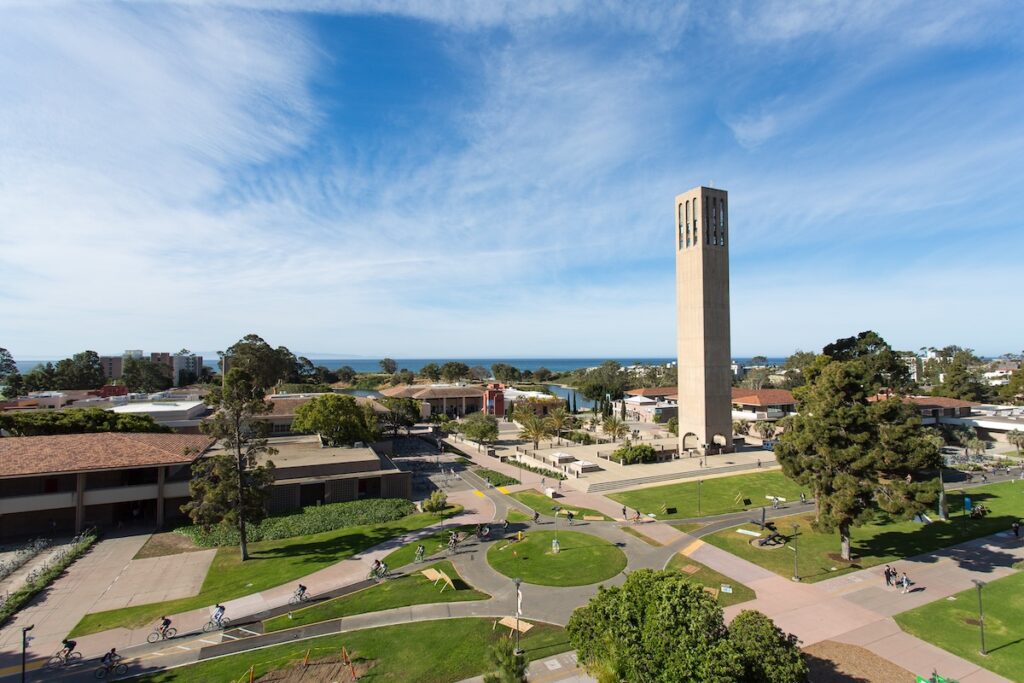
UC Santa Barbara’s Department of Psychological & Brain Sciences ranks as one of the leading experimental psychology programs in the United States. The program sits among the top 15% of psychology programs nationwide based on National Research Council rankings. U.S. News & World Report places UCSB’s Psychology program at #39 overall, while the Social Psychology PhD program holds an impressive #9 national ranking.
The psychology department creates a thriving academic community with 42 full-time faculty members, about 70 PhD students, and 2,500 undergraduate majors. This student-to-faculty ratio gives students customized attention and mentorship opportunities throughout their academic experience.
UCSB stands apart by focusing on experimental research psychology rather than clinical or counseling psychology. The department structures its research and teaching around four main areas:
- Cognition, Perception, and Cognitive Neuroscience: Learning how humans notice, remember, think, and interact with the world
- Developmental and Evolutionary Psychology: Studying the developmental and evolutionary origins of human behavior
- Neuroscience and Behavior: Providing balanced training in behavioral and systems neuroscience
- Social Psychology: Preparing experimental social psychologists for academic and research careers
The program’s strength lies in its state-of-the-art interdisciplinary research. Faculty members cooperate with colleagues in anthropology, biological sciences, communication, education, and geography. Students learn about ground research where these fields intersect.
Undergraduates can choose between two degree options: the B.S. in Psychological & Brain Sciences and the B.S. in Biopsychology. UCSB offers excellent research opportunities, with about 300 students each quarter working as research assistants in psychology labs.
Students typically complete the PhD program in five to six years. They start with core courses covering theoretical and empirical aspects of psychology while conducting research under faculty supervision. Later years focus on specialized coursework, comprehensive examinations, and dissertation completion.
The psychology department supports various student organizations, including the Society of Undergraduate Psychologists and Psi Chi, the International Honor Society in Psychology. Students can also participate in the Access Grads program, which pairs psychology undergraduates interested in graduate school with graduate student mentors.
UCSB’s psychology program prepares students for diverse careers while promoting a supportive academic environment dedicated to understanding mind, brain, and behavior.
School info
UC Santa Barbara’s Department of Psychological & Brain Sciences sits in a stunning location between the Santa Ynez mountains and the Pacific Ocean. This beautiful setting creates an inspiring environment that sparks academic excellence and creativity. The university ranks as the fifth leading public university in the nation as part of the prestigious University of California system.
The department spreads across several campus buildings. Research labs occupy the second and third floors of the Psychology Building, which serves as a central hub where students and faculty work together. The department thrives with 42 faculty members, 70 graduate students, and around 2,500 undergraduate majors who pursue state-of-the-art science to understand mind, brain, and behavior.
The department’s nationally recognized research centers stand out:
- The SAGE Center for the Study of the Mind – Uses advanced analytical technologies to aid interdisciplinary research on brain-mind relationships
- The Brain Imaging Center – Houses a state-of-the-art Siemens Prisma 3T scanner to conduct fMRI, EEG, TMS, DSI, and NIRS research
- Research Center for Virtual Environments and Behavior – Studies the interaction between computer-generated virtual environments and human behavior
- Center for Evolutionary Psychology – Supports research and training in evolutionary psychology
- Center for Mindfulness & Human Potential – Develops evidence-based mindfulness training programs
Students have access to complete campus services. The department works closely with Counseling & Psychological Services (CAPS), which provides mental health support to UCSB’s student community. Student Health Service previously offered behavioral health services, but these are now moving to CAPS.
The department emphasizes experimental psychology in four core research areas and maintains a strong tradition of empirical teaching. Students build extensive partnerships with other fields like anthropology, communication, biological sciences, educational psychology, linguistics, geography, and sociology.
The department offers many resources to students, especially through the Graduate Student Resource Center and various student organizations. The campus Wellbeing Website connects students with health, wellness, and self-care resources.
Programs offered
UCSB’s Department of Psychological & Brain Sciences provides various academic paths that promote scientific understanding of behavior. Students can choose between two bachelor’s degrees: the B.S. in Psychological & Brain Sciences and the B.S. in Biopsychology. Students must complete pre-major requirements before they can declare their full major status.
The B.S. major in Psychological & Brain Sciences has four key components: Area I, Area II, Area III (Preparation for the Major), and Upper Division coursework. Students need to maintain specific GPA requirements in their prerequisite courses—a 2.7 UC GPA for core psychology courses and a 2.0 UC GPA for science prerequisites. After admission to the full major, students complete requirements in social psychology, developmental psychology, biopsychology, and cognitive psychology. They also take laboratory courses and specialized electives.
UCSB runs a competitive Ph.D. program in Psychological & Brain Sciences that students usually finish in five to six years. The department does not accept students for terminal master’s degrees. Doctoral students start with core courses and research work under faculty guidance. Their coursework becomes more specialized as they advance.
The doctoral program focuses on four main research training areas: Cognition, Perception, and Cognitive Neuroscience; Developmental and Evolutionary Psychology; Neuroscience and Behavior; and Social Psychology. The program has about 70 graduate students and 42 faculty members, which creates an excellent student-to-faculty ratio. Students can also explore interdisciplinary emphases in Bioengineering, Cognitive Science, Environment and Society, Neuroengineering, Quantitative Methods in the Social Sciences, and Technology and Society.
Undergraduates get valuable research experience through the Research Assistant program. Students who enroll in PSY 99 or PSY 199 courses work in faculty laboratories and apply their knowledge hands-on. This experience helps students prepare for graduate school.
The department supports several student groups actively. The Society of Undergraduate Psychologists welcomes psychology majors and anyone interested in psychology. Students with high academic achievement can join Psi Chi, the International Honor Society in Psychology. The Access Grads program pairs psychology undergraduates with graduate student mentors and helps increase research career access for students from different backgrounds.
Online options
UCSB’s Department of Psychological & Brain Sciences makes online learning accessible through flexible options that fit different student needs. The university’s digital education initiatives help students advance their psychology education from any location.
Students can choose from several online psychology course formats at UCSB. Online Live courses happen in real-time through Zoom or similar platforms, and students must attend scheduled sessions. Online on Demand courses work differently – students access all materials through Canvas, UCSB’s learning management system, and complete work at their own pace. Many students find Online Blended courses ideal because they combine scheduled meetings with self-paced learning.
UCSB’s summer sessions feature a growing number of fully online psychology courses. The Introduction to Psychology (PSY1) course shows how the department approaches online education effectively. This co-taught summer course brings together:
- Weekly readings with corresponding questions
- Pre-recorded professionally-developed lectures
- Small discussion sections that focus on real-life applications
The department uses “Insight Videos” as an innovative teaching tool. These pre-recorded stories come from former students who share their experiences about course challenges, study methods, and motivation techniques. Students often feel more connected through these videos, which help them understand that everyone faces similar challenges with course content.
Psychology majors can gain research experience through Sona Systems, a web-based research platform. Students learn about psychology from an insider’s point of view while they participate in psychological studies remotely.
GOLD, UCSB’s course registration system, lists online psychology courses under “ONLINE” or “ON ASYNC” for asynchronous options. Course expectations vary between classes. Some let students work at their own pace, while others need regular participation in assignments or activities.
Students taking online courses have full access to academic support. Remote counseling, advising, and tutoring services help them succeed in their studies.
Accreditation
Academic quality at UCSB’s psychology programs is vital to their institutional accreditation. UC Santa Barbara has managed to keep its accreditation through the Western Association of Schools and Colleges Senior College and University Commission (WSCUC). The university received reaffirmation of this accreditation for 2024-2033 after completing a comprehensive institutional review.
UCSB stands out among peer institutions in specialized psychology fields. The Department of Counseling, Clinical, and School Psychology (CCSP) has full accreditation from the American Psychological Association (APA) Commission on Accreditation as a combined psychology program. The program earned a ten-year re-accreditation from APA, which represents the highest recognition possible.
The program’s accreditation history dates back to 1981 when it received its original APA accreditation as a Counseling Psychology program. The program went through successful re-accreditations in 1986 and 1988, followed by provisional combined program accreditation in 1990. The APA granted five years full accreditation to the combined CCSP Department in 1994.
UCSB’s psychology program holds a unique position as one of only nine combined accredited programs nationwide. It is also one of just two programs in the country with accreditation in counseling, clinical, and school psychology. This achievement places UCSB among the leading psychology education providers in California and the United States.
The doctoral program in School Psychology has also earned National Association of School Psychologists approval. The California Commission on Teacher Credentialing has fully approved the School Psychology Specialization that provides a pupil personnel services credential.
Students can contact the APA’s Commission on Accreditation through their Office of Program Consultation and Accreditation in Washington, DC with questions about the program’s accredited status.
Admission Requirements
UCSB psychology programs have specific academic standards that students must meet. Undergraduate freshmen start their journey in the Pre-Psychology major instead of direct admission to the full Psychology major. Students need to earn a 2.7 or higher average UCSB GPA in Pre-Major courses (PSY 1, PSY 3, PSY 5, PSY 7, and Math 34A) to advance to full major status.
The transition process comes with several essential requirements. Students must maintain a minimum 2.7 University of California grade-point average in Area I courses and a 2.0 GPA in Area II courses. Letter grades are mandatory for all courses. Students can’t have grades below C- in Areas I & II, and only one C- grade is allowed in these areas.
The UCSB psychology major welcomes transfer students who have completed at least 60 semester or 90 quarter units of UC-transferable college credit. California residents need a minimum 2.4 GPA, while non-residents must have a 2.8 GPA. Most admitted students perform well above these minimums, and selective majors often look for GPAs of 3.5 or higher.
UCSB’s Ph.D. program stands out among graduate psychology programs California. The department reviews applications once a year with a December 1 deadline. The program looks for candidates with a bachelor’s degree from an accredited university and a minimum B average in undergraduate coursework. Applicants must submit three recommendation letters, a statement of purpose about their research interests, a personal history statement, and a scholarly writing sample.
Ph.D. candidates who succeed typically have upper division GPAs above 3.5 and extensive research experience. Meeting basic requirements makes you eligible, but competition remains fierce since qualified applicants outnumber available spots.
International students must prove their English proficiency through TOEFL, IELTS, or Duolingo English Test scores. US citizens and permanent residents pay an application fee of $135, while international students pay $155.
Tuition
The cost of your education plays a vital role in pursuing UCSB psychology programs. Students pay tuition and fees of $16,035 for California residents and $49,885 for non-residents in the 2025-26 academic year. Food and housing costs add $21,975. This brings the total estimated cost to $39,859 for in-state students and $72,154 for out-of-state students.
Psychology program’s graduate students who are California residents pay $49,788 per year, while non-residents pay $64,890. Doctoral program students often get comprehensive financial support that includes:
- Multiyear funding packages that combine fellowships with teaching or research assistantships
- Full coverage of in-state and non-resident tuition
- Health insurance and most fees
- Living expense stipends
Students hired as Teaching Assistants or Graduate Student Researchers at 25% FTE or higher qualify for fee remission. First-year international doctoral students can receive the International Doctoral Recruitment Fellowship that helps with non-resident supplemental tuition.
The priority deadline for FAFSA applies to U.S. citizens and permanent residents seeking federal financial aid. Out-of-state students should get California residency by their second year’s start to lower their costs. Students who need flexibility with fee payments can opt for a payment plan with a $25 fee.
Additional Information
UCSB psychology students have access to exceptional campus resources and professional opportunities that complement their formal education. Student-led organizations build thriving communities on campus. Psi Chi—the International Honor Society in Psychology—celebrates academic excellence and helps students access over $400,000 in annual scholarships and grants. Both psychology majors and students interested in the field can join the Society of Undergraduate Psychologists.
Psychology graduates find career opportunities in many fields. UCSB alumni work in sales, marketing, law enforcement, human resources, education, and research. Students can learn about various sub-fields through the American Psychological Association’s Psychology Careers Guide.
Students can start their careers as Applied Behavioral Analysis Therapists, Psychiatric Technicians, Residential Counselors, or Social Services Assistants without graduate education. These positions let graduates apply their knowledge while they develop specialized skills.
The Interactive Learning Pavilion has changed the educational landscape with approximately 2,000 classroom seats, which boosted university capacity by 35%. Students now have access to five lecture halls and 20 classrooms designed for traditional lectures, hybrid teaching, and group work.
The PBS Alumni Council, launched in 2019, helps former and current students build stronger networks for career development. Alumni stay connected through events like ENGAGE, where they can participate in career panels and networking sessions.