
UC Berkeley Psychology Programs
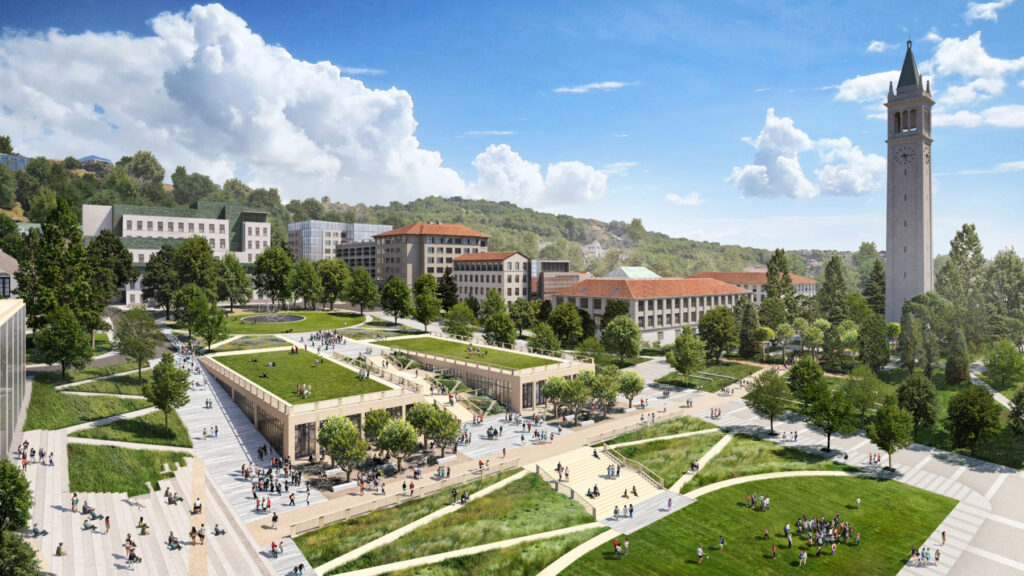
UC Berkeley’s Psychology Department is one of the world’s leading centers for psychological research and education. The department, now 102 years old, began its journey in 1922 after psychology courses spent 34 years under the Philosophy Department’s wing. The original core team had just four members: George Malcolm Stratton (appointed Chair), Warner Brown, Edward Chace Tolman, and Olga Louise Bridgman – who broke ground as psychology’s first female faculty member.
Tolman Hall served as the department’s home for many years. Named after Edward Chace Tolman, a Harvard-trained experimentalist who joined Berkeley in 1918, the building housed the department from the early 1960s until 2018. Now, you’ll find the Psychology Department at Berkeley Way West, a modern facility at Berkeley Way and Shattuck Avenue.
The department has grown remarkably over its near-century existence. Starting with just four faculty members, it now features 36 distinguished professors. These experts conduct pioneering research in six areas that showcase psychology’s broad scope:
- Behavioral and Systems Neuroscience
- Cognition
- Developmental
- Clinical Science
- Cognitive Neuroscience
- Social-Personality Psychology
National rankings consistently highlight Berkeley Psychology’s excellence. U.S. News and World Report’s 2026 rankings placed the undergraduate program at No. 2. The graduate programs reached an even higher achievement, earning the No. 1 spot in spring 2024.
The department’s story also reflects its dedication to diversity and inclusion. Early pioneers like Olga Bridgman and Jean Walker Macfarlane made vital contributions as female faculty members. Yet, more women joined the faculty only in the 1970s after new hiring policies and affirmative action took effect. We have a long way to go, but we can build on this progress – female faculty representation has risen from 0% to 47% over five decades.
Programs offered
UC Berkeley’s Psychology Department has a complete range of academic programs that help students achieve their educational goals. The department builds its educational programs on six key research areas that are the foundations of both undergraduate and graduate programs.
Students can pursue a Psychology major that gives them broad exposure to the field and helps them gain deeper understanding in at least one content area. The program teaches methodological, statistical, and critical thinking skills that students can use in any psychology specialization. Psychology 1 (General Psychology) is the only lower division prerequisite needed. All majors must take Psychology 101 (Research and Data Analysis).
The department runs a Summer minor program in Clinical and Counseling Psychology for students who want specialized knowledge without a full major commitment. Students get additional benefits through courses that meet American Cultures and L&S breadth requirements, Freshman and Sophomore Seminars, and Psychology DeCals. Students can also earn credits by working as Research Assistants in psychology labs through PSYCH 199.
The graduate program at UC Berkeley Psychology creates scholar-researchers who maintain a broad viewpoint while developing expertise for independent research. This STEM-designated program lets students specialize in six areas:
- Behavioral and Systems Neuroscience
- Clinical Science
- Cognition
- Cognitive Neuroscience
- Developmental
- Social-Personality Psychology
Each area has specific requirements that combine courses, seminars, and supervised independent research. Graduate students must finish core departmental courses in data analysis, teaching, and professional development. They also need to take area-specific proseminars and stay involved in research.
The department offers a Post-Baccalaureate Certificate Program for graduates who want to enter psychology. This complete retraining program helps students who didn’t major in psychology or psychology majors who want to build expertise in a particular sub-field. Students can finish this full-time program in three semesters, with an optional fourth semester available.
UC Berkeley’s steadfast dedication to academic excellence has earned it the #2 ranking among Graduate Psychology Departments according to U.S. News & World Report (2013). This ranking shows the department’s success in providing outstanding teaching, mentorship, and research training across its programs.
Online options
UC Berkeley offers several online learning options in psychology that give students the freedom to learn on their terms. Students can access Berkeley’s high-quality education from any location worldwide without needing visas or relocation.
UC Berkeley Extension’s three online course formats cater to students’ different priorities:
- Live Online: These courses deliver interactive learning with scheduled synchronous Zoom sessions. Students attend virtual classes in real-time and interact directly with instructors and classmates.
- Start Anytime: This enrollment format begins right after registration. Students get 90-180 days to finish their coursework at a comfortable pace[103].
- Fixed-Date: These well-laid-out courses come with specific start and end dates but no live sessions. Students still get plenty of chances to cooperate with peers and instructors[103].
The Post-Baccalaureate Program in Psychology stands out as a fully online option for psychology students. This adaptable program lets students arrange 18 semester units of coursework to match their academic or career goals. Students can prepare for advanced degrees or career growth in psychology-related fields.
UC Berkeley makes psychology knowledge available through various online initiatives. The university’s “Science of Happiness” course, created by UC Berkeley’s Greater Good Science Center, became the first MOOC (Massive Open Online Course) focused on positive psychology. This eight-week course shows students research-backed ways to encourage happiness and well-being.
The university hosts virtual events that connect future students with faculty members. The Graduate Diversity Admissions Fair offers virtual sessions where students learn about top-ranked graduate programs, experience Berkeley’s culture, understand the application process, and explore funding options. While open to everyone, this fair serves future students from historically excluded backgrounds.
Canvas acts as the main online learning platform for current students. It features interactive video lectures, discussion forums, readings, and round-the-clock technical support. Students message instructors, check graded assignments, and access course materials from any location.
Psychology undergraduates join virtual student groups like Psi Chi (The International Honors Society in Psychology) and Berkeley Psychology Group. These organizations host online networking events and therapy sessions.
Berkeley’s diverse online options show its steadfast dedication to making world-class psychology education available to students everywhere.
Accreditation
Accreditation is a vital part of UC Berkeley’s psychology programs. It helps establish their quality and credibility. The university has specific accreditations that show its dedication to high educational standards.
UC Berkeley’s Clinical Science Program has accreditation from the Psychological Clinical Science Accreditation System (PCSAS). The program first earned PCSAS accreditation in 2013. It received re-accreditation in 2023, which will last through May 2033.
The Clinical Science Program used to have two accreditations. It had continuous accreditation from the American Psychological Association (APA) since 1948. The program made a big change in 2020. It asked for and got “accredited, inactive” status from APA. Students admitted before 2020 still have APA accreditation, but new students can’t join the APA program anymore.
This change shows UC Berkeley’s new direction in education. The faculty saw that PCSAS accreditation matched their training goals better because it:
- Combines science and application completely
- Lets them be more flexible with evidence-based training
- Helps students become leaders in clinical science
UC Berkeley’s School Psychology Program stands out with its own impressive credentials. The program has accreditation from the American Psychological Association and the California State Department of Education. The National Association of School Psychologists (NASP) has also approved it.
PCSAS accreditation gives students great career opportunities. They can work for the U.S. Department of Veterans Affairs (the nation’s largest employer of psychologists) and the U.S. Public Health Service. As of August 2023, graduates can get licensed in many states that accept PCSAS or don’t need APA accreditation. These states include California, New York, Arizona, Illinois, Delaware, Michigan, Missouri, New Mexico, Texas, and Virginia.
The Council for Higher Education Accreditation (CHEA) recognizes both PCSAS and APA as valid accreditors. Some psychology-related programs at UC Berkeley might have specific accreditations from groups like the National Association of School Psychologists for specialist-level programs.
UC Berkeley’s strong accreditation standards mean its psychology graduates get an education that goes beyond national quality measures. This prepares them well for careers in psychology of all types.
Admission Requirements
UC Berkeley’s psychology programs set a high bar for admission with an extremely selective process. The PhD program accepts only 2.4% of applicants, offering just 20 spots from 820 applications for the 2025 entering class. Clinical Science proves even more selective with a mere 1.1% admission rate.
The PhD program accepts applications from September 10 until November 17, 2025, at 8:59 PM PST. Students applying for Fall 2026 need not worry about GRE scores as they’re optional and won’t affect application decisions.
A complete PhD application package needs several key components. Students must submit their transcripts (unofficial versions work for the first review), along with a resume or CV. The application also requires a Statement of Purpose and Personal History Statement, each running 1.5-2 pages single-spaced. Three recommendation letters round out the package, with at least two coming from professors or research supervisors.
Research experience plays a crucial role in successful applications. Most students who receive admission have spent at least one year conducting research, either during their undergraduate years or after graduation. Psychology-related laboratory or field research proves vital for strong candidates.
Students from other countries must prove their English language skills. A TOEFL score of 90 or higher, or an IELTS score of at least 7, meets this requirement. Students can skip this requirement if they’ve completed a year of full-time studies at a U.S. institution with B grades or better.
New rules apply for declaring an undergraduate psychology major at Berkeley starting Fall 2024. Students need to go through an all-encompassing review process after meeting prerequisites with a minimum 2.0 GPA. First-year students should submit their applications by their 5th semester or before hitting 59 units. Transfer students face a deadline of their 2nd semester or before reaching 79 units.
The Post-Baccalaureate Certificate Program welcomes graduates with any four-year degree, even without previous psychology courses. Students need at least three semesters to finish this program. They must submit a program application, resume, transcripts, and pay a non-refundable $75 application fee.
Berkeley’s psychology programs showcase their academic excellence through highly competitive admission rates. The numbers tell an interesting story: Behavioral and Systems Neuroscience admitted just one student from six applications, while Clinical Science selected five students from 449 applications in 2025.
Tuition
The cost structure at UC Berkeley’s psychology department needs careful planning to finance your education. Your residency status and entry year determine the undergraduate tuition rates. Continuing resident undergraduate students will pay $11,168.75 per semester for the 2025-26 academic year. Non-resident students face higher charges at $29,969.75 per semester. The rates increase slightly for new students – residents pay $11,409.75 while non-residents pay $30,210.75.
Psychology graduate programs charge $16,902.00 annually for tuition and fees. International and out-of-state students must pay an extra $15,102.00 as Non-resident Supplemental Tuition. The department offers significant financial support and guarantees five years of funding for matriculated students. This covers academic year tuition and related fees.
The department pays non-resident supplemental tuition for first-year domestic out-of-state students during their initial two semesters. These students must then establish California residency to avoid additional charges. Faculty mentors support international students’ non-resident tuition for the first two semesters. The department covers the third and fourth semesters.
Students can opt for the Fee Payment Plan (FPP) instead of paying tuition at once. This plan lets you pay qualified registration fees in five monthly installments each semester. The plan requires a non-refundable fee of $60.00 per semester.
The payment plan covers tuition, non-resident supplemental tuition, campus fees, student services fees, transit fees, and graduate program fees. Some charges remain outside the plan’s scope, including health insurance fees, document management fees, and summer tuition.
Post-baccalaureate certificate program’s fee structure differs. Students pay $49,500.00 for three semesters or $55,000.00 for four semesters. International students must also buy health insurance at $650.00 per semester as part of their visa requirements.
Additional Information
UC Berkeley gives psychology students many valuable resources beyond regular classes. Students run the Graduate Assembly of Students in Psychology (GASP), which represents graduate students and has a Diversity Task Force that works on cultural aspects of courses and research.
B PsychEd, Berkeley’s first Psychology Club, helps undergraduates with research chances, course materials, and graduation planning. The International Honor Society in Psychology, Psi Chi, pushes scientific work forward in the field. Mood Psychology helps international students boost their mental health through awareness programs and self-care techniques.
Students can do research with several connected departments and institutes like the Helen Wills Neuroscience Institute, Institute for Personality and Social Research, and UC Berkeley Developmental Labs. The labs study how children learn language, math, and reasoning. Their work often appears in NPR, BBC, and New York Times coverage.
Graduates join a worldwide network that gives them mentorship, career growth resources, and job advice. The Berkeley Network connects professionals through company programs, online learning, and industry events.
People who want to help future students can join the Social Sciences Dean’s Circle by pledging $1,000 or more yearly for three years to the Psychology Annual Fund. Members get email updates, invites to special events, and chances to talk with faculty and graduate students about new research findings.