
Sonoma State University Psychology Programs
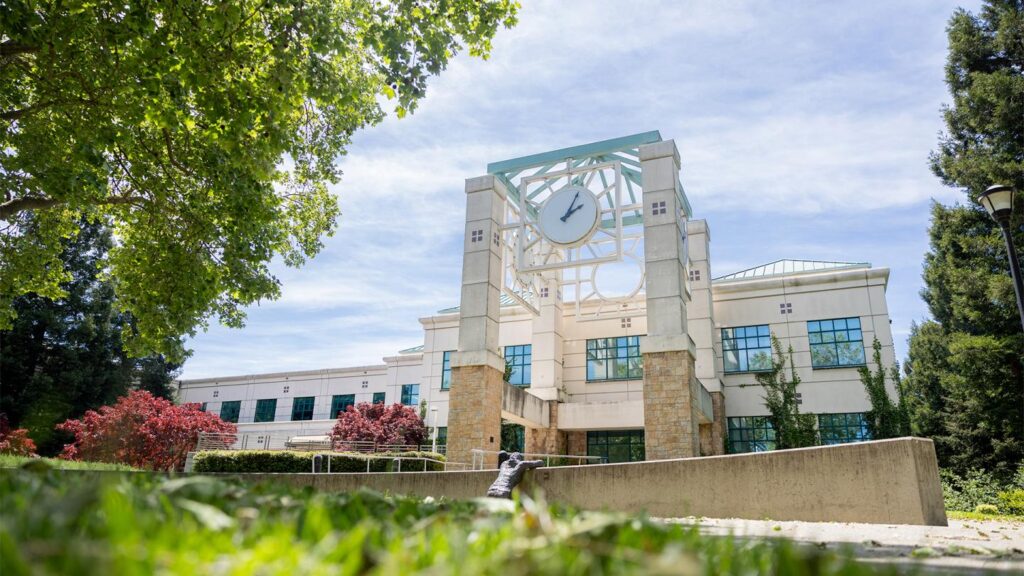
The Psychology Department at Sonoma State University, now 63 years old, has strong foundations in humanistic and existential traditions. The department pioneered the first graduate program in humanistic psychology, and four of its faculty members have served as presidents of the Association for Humanistic Psychology.
Students can find the psychology program in Stevenson Hall 3115. The department office welcomes visitors Monday through Friday from 8 AM to 5 PM. SSU’s beautiful 269-acre suburban campus creates a perfect setting for students to learn and grow. With a student-faculty ratio of 17:1, students get the attention they need to succeed in their studies while at this school.
The department has earned recognition for its groundbreaking work in several areas. These include somatics, client-centered therapy, expressive arts, biofeedback, health psychology, organization development, ecopsychology, Jungian psychology, transpersonal psychology, and innovative learning approaches.
SSU psychology faculty members specialize in these contemporary fields:
- Social justice, multicultural psychology, health psychology
- Depth psychology, clinical practice, mental health counseling
- Spirituality, mindfulness, community service
- Ecopsychology, creativity, and child development
Students explore five core “Breadth areas” that cover psychology’s central subfields: holistic, clinical/counseling, developmental, social/personality, and cognitive/physiological. Faculty members conduct research in many areas and welcome students to join as research assistants.
SSU’s psychology community thrives through two main organizations. Psi Chi, the National Honor Society in Psychology, offers lifetime recognition that helps with graduate school applications and job searches. The Psychology Club welcomes students from every major to enjoy guest speakers, develop professional skills, and engage in psychology discussions.
U.S. News & World Report’s 2026 rankings place Sonoma State University at #23 among Regional Universities West and #13 among Top Public Schools. Psychology is one of SSU’s most popular majors – 14% of graduates earn this degree and start their careers with an average salary of $54,617.
Students receive comprehensive support through services like Counseling and Psychological Services (CAPS), which provides free round-the-clock counseling. SSU’s campus celebrates diversity and welcomes students from all racial, ethnic, gender, religious, and socioeconomic backgrounds.
Programs offered
Sonoma State University’s psychology programs give students strong foundations at both undergraduate and graduate levels. These programs help students prepare for many career paths in psychology.
Students pursuing a Bachelor of Arts in Psychology need to complete 40 psychology units and 3-4 statistics units. The program focuses on five key “Breadth areas”: Holistic, Clinical/Counseling, Developmental, Social/Personality, and Cognitive/Physiological. Students must study at least four areas to gain broad knowledge in psychology.
The psychology department continues to grow steadily. It awarded 213 bachelor’s degrees in 2021-2022, showing a 5% increase from the previous year. This growth shows the program’s strong reputation among psychology students.
SSU’s graduate program offers two distinct paths:
- Master of Arts in Psychology that focuses on depth psychology and follows Jungian teachings about symbolism
- Master of Science in Mental Health Counseling
Students can choose between two professional specializations in the graduate counseling program:
- Clinical Mental Health Counseling (CMHC) – This 60-unit program has 19 units of major core requirements and 41 units of specialized coursework. Students who complete this program meet all academic requirements for Marriage and Family Therapist (LMFT) and Professional Clinical Counselor (LPCC) licensure in California.
- School Counseling – This path helps students build careers in school counseling and earn their Professional Personnel Services (PPS) credential.
The Masters in Psychology and Counseling Accreditation Council has accredited SSU’s Clinical Mental Health Counseling program through September 2030. Students must complete 600 clock hours of supervised field experience. This experience starts in their first semester and ends with intensive supervised training in counseling settings.
CMHC program’s core courses cover counseling theories, applied techniques, career counseling, research methods, multicultural counseling, clinical diagnosis, treatment planning, and group counseling. This well-laid-out curriculum gives graduates strong theoretical knowledge and practical skills.
The department helps CMHC students find field placements in marriage and family counseling agencies, mental health clinics, counseling centers, public schools, and college-level counseling facilities. School Counseling students work at least two K-12 levels: elementary, middle, or high school.
While SSU has strong graduate programs, they remain selective. Only 4 students earned psychology master’s degrees from SSU in 2022.
Online options
Sonoma State University gives psychology students multiple online options that fit their schedule. Students can take asynchronous online courses and complete work at their own pace. The available courses include Psychology of Well-Being, Life Span Development, Social Psychology, Health Psychology, Psychopathology, and Cognitive Psychology. Students who want live interaction can join the Jungian Psychology course with scheduled Friday morning sessions.
Students can also take a self-paced Research Methods in Psychology course that transfers to SSU programs. This NCCRS-accredited course costs $250, which is nowhere near traditional on-campus tuition rates. Students earn 3-4 credits they can apply to their degree.
SSU uses Canvas as its main learning platform where teachers post assignments, readings, and quizzes. Students connect through Zoom for live virtual lectures that create an interactive learning space.
The university library offers great supplementary materials. Students can access free courses from MIT Open Courseware and the Saylor Foundation, open textbooks from OpenStax and BC Campus, and educational podcasts like Great Ideas in Psychology and Psych Files.
Students who need help can book virtual tutoring sessions through their Student Portal at the Learning and Academic Resource Center (LARC). MESA provides Zoom tutoring for STEM subjects that complement psychology studies.
The psychology department’s YouTube channel helps students with instructional videos about university systems like Seawolf Scheduler, course enrollment tools, and the Academic Requirements Report (ARR). This makes navigating administrative tasks easier.
Accreditation
Quality assurance in higher education relies heavily on accreditation. Sonoma State University proudly holds institutional accreditation from the Western Association of Schools and Colleges (WASC) Senior College and University Commission. The university has managed to keep this status since 1969. This accreditation shows that SSU meets high standards of quality and effectiveness.
SSU currently stands “Accredited,” which shows the Commission found the institution compliant with all applicable standards. The Commission’s latest action took place on July 29, 2021, and the next accreditation visit will happen in Fall 2025.
Psychology students can expect several valuable benefits from this institutional accreditation:
- Academic offerings that meet strict quality standards
- A university that runs efficiently with sound finances
- Programs that stay relevant to student needs
- Graduate credentials that boost career prospects
SSU’s psychology-related programs have earned specialized accreditations. The Master’s in Clinical Mental Health Counseling program holds accreditation from the Masters in Psychology and Counseling Accreditation Council (MPCAC) through September 2030. This recognition confirms the program prepares competent counseling professionals who meet professional standards.
Psychology students interested in educational careers should know that the School Counseling program earned re-accreditation from the California Commission on Teaching Credentialing in 2020. The Council for Accreditation of Counseling and Related Educational Programs (CACREP) has also accredited both the Clinical Mental Health Counseling and School Counseling M.A. programs.
Accreditation involves a detailed review against set standards through self-assessment, peer review, and regular reaffirmation. SSU must show WASC how it meets four core standards: defining institutional mission, achieving educational objectives, assuring resources and organizational structures, and maintaining quality assurance systems.
SSU regularly creates and shares data about student achievement, including retention and graduation rates, plus evidence of student learning outcomes. This transparency helps you learn about the value of your educational investment.
The university is California’s only member of the Council of Public Liberal Arts Colleges (COPLAC), a prominent association of public institutions that deliver outstanding undergraduate liberal arts education. This difference highlights SSU’s steadfast dedication to exceptional educational experiences.
Admission Requirements
Sonoma State University’s Psychology programs have specific academic standards and prerequisite courses you need to complete. You’ll need to submit your application through Cal State Apply, the California State University’s online application system.
The undergraduate psychology program requires a minimum 2.5 GPA in your last 60 semester units. Since psychology is an impacted major at SSU, meeting these basic requirements doesn’t guarantee your spot. Transfer students need an overall cumulative CSU transferable GPA of 2.50. They should complete Introduction to Psychology (PSY 250), Research Methods (PSY 280), and Statistics (MATH 165) before applying.
Your first two years as a first-year student should focus on lower-division General Education requirements. Two key GE courses you need to take early are:
- Psychology 250, Introduction to Psychology (GE Area 4)
- Math 165, Statistics (GE Area 2)
Students with qualifying AP or IB Psychology test scores don’t need to take Psychology 250. You can also take Economics 217 or Business 211 instead of the statistics requirement.
The graduate programs in counseling psychology have much higher admission standards. The Clinical Mental Health Counseling program needs:
- BA or BS degree, preferably in psychology or related field
- 0 minimum GPA (you can explain lower GPAs in your personal statement)
- Completed courses in personality theory and abnormal psychology
- Three letters of recommendation through Cal State Apply
The School Counseling program also needs a course in child development. You must meet California credential requirements that show basic skills. School Counseling students need a valid Certificate of Clearance before classes begin.
Graduate applications start October 1 and close December 1. Qualified candidates get interview invitations between mid-February and March. You must attend these interviews, which are usually conducted by two faculty members or a faculty member and program graduate.
Professional experience helps your graduate program application significantly. The department looks for about one year of full-time or two years of part-time human service experience. Your personal traits like psychological awareness, ability to reflect, and people skills matter just as much.
The faculty admissions committee ranks all candidates after reviewing applications. They then send out letters to admitted students, waitlisted applicants, and those who weren’t accepted.
Tuition
Your psychology education’s financial planning at Sonoma State University is a vital step to consider. The university’s 2025-2026 tuition rates remain affordable compared to national averages.
In-state tuition costs $5,742 for undergraduate psychology students. Additional fees of $2,448 bring the total mandatory charges to $9,062. Out-of-state students pay by a lot more at $17,622 for tuition plus $2,448 in fees, totaling $24,994. These amounts stay below the national average costs of $12,422 for in-state and $29,909 for out-of-state tuition.
The university’s graduate psychology programs follow different rate structures. California residents in the Clinical Mental Health Counseling program and other graduate studies must pay $10,148 in mandatory registration charges. Non-resident graduate students’ additional costs reach $12,600, based on $420 per unit with a typical 15-unit semester load.
Your total educational investment covers several expenses beyond tuition:
- Books and supplies: Approximately $856 annually
- On-campus housing and meals: $16,802 per year
- Off-campus housing and meals: $22,086 per year
- Transportation: $916-$2,018 depending on living situation
- Personal expenses: $1,684-$2,328 annually
The total estimated annual cost varies based on your living situation, ranging from $23,478 when living with family to $35,732 for off-campus housing.
Financial support remains available to many psychology students. First-year students’ statistics show 58% receive need-based aid. The average need-based scholarship or grant reaches $12,452, with an additional $3,108 in self-help aid through federal loans and work-study.
The university’s payment schedule requires fall semester charges by August 6, 2025, and late registration payments by September 2, 2025. Spring semester payments are due January 14, 2026, with late registration deadline on February 9, 2026. Students who miss these deadlines risk being dropped from classes.
Students can pay through several methods. Online payments accept credit/debit cards with a 2.65% service fee, while electronic check payments are free. The university also accepts checks or money orders by mail and in-person payments at the Seawolf Service Center.
Additional Information
Sonoma State University’s Psychology department provides numerous opportunities that go well beyond classroom learning to boost your academic experience. Students can access extensive research resources, including connections to UC psychology graduate programs, GradSchool.com, and Psychology Degree 411 that help explore career paths.
Research is the foundation of SSU’s psychology experience. Students can join faculty research labs, which proves essential since many graduate programs require research experience. Faculty members lead several research projects where students can work as research assistants.
SSU’s Office of Research and Sponsored Programs helps students fund their research through Student Research Awards. Additional funding comes from the College of Humanities, Social Sciences, and the Arts when students present at conferences.
The Mental Health Ambassadors program gives students valuable hands-on experience. This undergraduate internship program needs a 3-hour weekly commitment (45 hours/semester) and focuses on mental health advocacy. Students receive training on mental health topics and help promote wellness across campus.
Students can choose from more than 120 student-led clubs and organizations. SSU psychology graduates work at prominent companies like Google, Facebook, and Kaiser. Most professional psychology positions need at least an M.A. degree, and about two-thirds of SSU psychology graduates ended up pursuing advanced studies.