
SDSU Psychology Programs
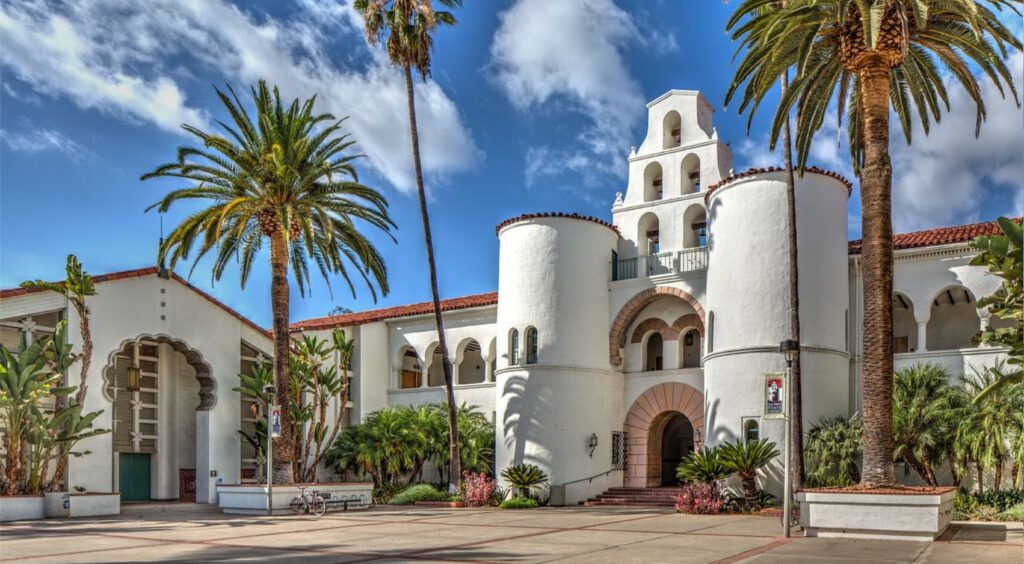
SDSU’s Psychology Department ranks as one of the most popular academic units on campus. More students graduate with psychology degrees than any other major over the last several years. The department currently serves 2,123 undergraduate students, 66 master’s students, and 69 doctoral students. Students earned 575 bachelor’s degrees, 44 master’s degrees, and 7 doctoral degrees during the 2023-2024 academic year, showing the department’s significant educational reach.
Students pursuing an SDSU psychology degree can choose from three distinct Bachelor of Arts degree paths. The B.A. in Psychology in Liberal Arts and Sciences comes with optional specializations in Industrial & Organizational Psychology or Neuroscience. Students who complete the California Community College Associate in Arts in Psychology for Transfer (AA-T) degree can opt for a separate B.A. in Applied Arts and Sciences.
These three degree paths share identical pre-major courses. Students choosing Industrial & Organizational Psychology or Neuroscience specializations need higher minimum grades in certain courses. Students pursuing Neuroscience must score a B (3.0) or higher in PSY 211 and PSY 260. The Industrial and Organizational Psychology emphasis requires a B (3.0) or higher in PSY 280.
Upper-division coursework requirements:
- Complete pre-major courses with required grades
- Maintain a 2.50 overall GPA for most paths or 3.00 for Neuroscience emphasis
The SDSU psychology curriculum follows a well-laid-out approach that balances methods and knowledge breadth. Students take methods courses (PSY 301 or PSY 410 or both) and must complete breadth requirements. Course groups cover social psychology, personality/organizational psychology, developmental/clinical psychology, and cognitive/physiological psychology.
SDSU offers outstanding facilities that elevate the learning experience. The campus houses a Magnetic Resonance Imaging (MRI) facility for cutting-edge neuroscience research and an SDSU Psychology Clinic where graduate students get valuable clinical experience. Research centers like the South Bay Latino Research Center and SDSU’s Center for Autism create opportunities for research and community involvement.
Graduate students can pursue M.A. and M.S. programs. The M.A. program prepares students for competitive Ph.D. programs. The M.S. in Applied Psychology offers specialized tracks in Industrial and Organizational Psychology and Quantitative Methods. The department partners with the University of California, San Diego to offer an American Psychological Association-accredited Ph.D. program in clinical psychology.
Programs offered
SDSU psychology students can find a wealth of program options that match their career goals and academic interests. The psychology department builds its curriculum on scientific approaches to learn about human behavior and mental processes.
The undergraduate Psychology B.A. in Liberal Arts and Sciences provides a detailed foundation in psychological theory and research methods. This degree path has courses that cover social psychology, personality development, cognitive processes, and neuroscience. The sort of thing I love about this program is how students can study behavioral neuroscience, organizational psychology, and forensic psychology through specialized electives.
SDSU offers two specialized emphases within the Liberal Arts and Sciences track to match specific interests:
The Emphasis in Industrial and Organizational Psychology equips students with workplace-related psychological applications, including human resources interventions and organizational behavior.
The Emphasis in Neuroscience features a four-course sequence that makes graduates more competitive for research positions and graduate programs in neuropsychology. Students need to maintain a B (3.0) or better in prerequisite courses like PSY 211 and PSY 260. Core courses feature behavioral neuroscience, cognitive neuroscience, neuropsychology, and advanced topics like neuroimaging.
SDSU also offers a separate Psychology B.A. in Applied Arts and Sciences exclusively for students who have completed the California Community College Associate in Arts in Psychology for Transfer degree.
The graduate-level Master of Arts (M.A.) in Psychology program prepares students for doctoral studies through research-intensive training. Students collaborate with faculty mentors in research laboratories that specialize in behavioral and cognitive neuroscience, learning and cognition, social/personality psychology, developmental psychology, or physical/mental health research.
The Master of Science (M.S.) in Applied Psychology program features two specialized tracks:
- Industrial-Organizational Psychology
- Quantitative Methods (replacing the Program Evaluation track)
Both M.S. tracks require students to complete a research thesis and a 300-hour internship that ensures graduates develop both scientific and practical skills. Most students receive 20-hour-per-week assistantships that support their studies.
Students get hands-on experience in several research facilities, including the Center for Clinical and Cognitive Neuroscience and the SDSU Center for Autism and Developmental Disorders. These research opportunities help students develop valuable transferable skills in analytical thinking, research design, statistical analysis, and technical writing.
SDSU psychology graduates build successful careers in a variety of settings, from healthcare organizations like Sharp Healthcare and Family Health Centers of San Diego to technology companies like Google and Dexcom.
Online options
Students looking for a fully online SDSU psychology major program will find their options limited. SDSU does not offer an online option for its psychology bachelor’s degree. Students must attend classes on campus to get their degree.
The Certificate in Industrial/Organizational Psychology classes run only during the regular academic year at SDSU campus. Students don’t have any online options. The psychology department believes face-to-face learning works best for undergraduate education.
All the same, SDSU has some related programs that mix online and in-person learning. The Master of Arts degree in Counseling (Education) stands out with its focus on mental health recovery and trauma-informed care. This hybrid program includes:
- Most courses delivered online
- Workshops that last 3-5 days in person
- 1-2 campus orientations in Fall and a hands-on lab in Spring Semester
- 15-18 hours of weekly study time
- A schedule that lets students work while they study
This hybrid MA in Counseling works great for professionals who want to grow their careers without leaving their jobs. While it’s not strictly a psychology degree, it covers similar mental health topics and comes closest to online psychology studies at SDSU.
SDSU Global Campus also offers online Graduate Certificates in “Restorative Justice Practice and Trauma-Informed Care” and “Spanglish Decolonial Healing”. These might catch the eye of students interested in specialized psychology areas.
While online psychology options are limited, SDSU Global Campus has many more online programs in a variety of fields. Students can choose from professional certificates, career training programs, and personal enrichment courses. Industry experts or SDSU faculty teach all online courses to maintain high standards.
Students who need flexible learning but want to study psychology should look into these alternative online programs. These options could give them relevant knowledge that fits their schedule. Regular campus attendance remains the only way to complete the psychology major requirements.
Accreditation
SDSU’s prestigious accreditation status proves the high quality of its psychology programs. The university has held accreditation from the WASC Senior College and University Commission (WSCUC) since 1949. This university-wide recognition creates a strong foundation for specific program credentials.
The SDSU/UC San Diego Joint Doctoral Program in Clinical Psychology has proudly maintained American Psychological Association (APA) accreditation since 1990. This 33-year-old recognition shows the program’s excellence in clinical training. The Department of Psychology’s Clinical Psychology program also holds APA accreditation, which ensures students get education that meets national professional practice standards.
The School Psychology Program stands out with dual accreditation from the California Commission on Teacher Credentialing (CCTC) and the National Association of School Psychologists (NASP). These credentials show the program meets both state and national standards to prepare competent school psychology professionals.
These accreditations are a great way to get benefits for students in the SDSU psychology major. They confirm the quality of education students receive. They also help create smoother paths to professional licensing after graduation and boost degree value in competitive job markets.
SDSU’s psychology department stands among select programs with specialized accreditation on the university’s official accredited programs list. This recognition highlights the department’s steadfast dedication to meeting external quality standards beyond general university accreditation.
Students who plan to practice in other states should know that national accreditation helps with eligibility for credentials like the National Certification in School Psychology (NCSP). However, this doesn’t automatically guarantee certification, licensure, or credentialing outside California. Requirements vary by state, so students planning to practice elsewhere should research their state’s specific requirements and adjust their program choices.
SDSU psychology major programs’ accreditation status gives strong proof of educational quality. External validations show that course content, faculty qualifications, student support services, and educational outcomes meet current field standards. These credentials assure students that their education lines up with professional requirements and prepares them well for psychology careers.
Admission Requirements
Getting into the SDSU psychology major means meeting specific academic standards based on your chosen pathway. The original requirements state that psychology students must achieve a cumulative GPA of at least 2.50 for admission to the major. Students choosing the Neuroscience emphasis need to maintain a higher overall GPA of 3.00.
You must complete several preparation courses (pre-major requirements) that are the foundations of advanced study. All prerequisite courses except PSY 201 require letter grades instead of credit/no credit (Cr/NC), with a minimum grade of C (2.0) or better in each class.
The preparation courses stay the same for all three psychology degree paths. Students who pick specialized emphases should know that some courses may need higher minimum grades. The coursework remains similar, but performance standards change based on your chosen concentration.
Two key conditions must be met before moving to upper-division coursework:
- Complete all preparation for the major courses with the required grades
- Maintain the minimum overall GPA threshold (2.50 for most pathways or 3.00 for Neuroscience emphasis)
The Applied Arts and Sciences degree pathway welcomes students who completed the California Community College Associate in Arts in Psychology for Transfer (AA-T) degree. These students must meet all graduation requirements listed in the university bulletin.
Graduate programs have their own set of requirements. The MA program in Psychology looks for students with a psychology undergraduate GPA of 3.0 or higher. Students also need to complete courses in general psychology, physiological psychology, and statistical methods. The MS in Applied Psychology program’s enrolled students have an average undergraduate GPA of 3.67.
Meeting minimum requirements doesn’t guarantee acceptance into these programs. This applies especially to graduate programs where competition is fierce. The psychology department receives over 200 master’s program applications each year but only accepts about 30 students. A full picture of your qualifications becomes crucial.
Understanding these specific psychology major requirements early helps you prepare better for admission to your desired program.
Tuition
Money plays a significant role for students who want to pursue an SDSU psychology degree. California residents at the undergraduate level will pay $9,180 in tuition and fees for the 2025-26 academic year. The costs are higher for graduate students, with California residents paying $10,794 in tuition and fees.
Students from outside California face different financial realities. They must pay an extra $444 per unit on top of the standard fees. This means non-resident undergraduates taking 15 units each semester will pay an additional $13,320 yearly. New out-of-state and international students admitted for Fall 2025 must also pay $1,500 per semester ($3,000 yearly) as their Out-of-State and International Student Fee.
The California State University Board of Trustees has rolled out a new plan that will increase tuition by 6% yearly for five straight years starting Fall 2024. Students should plan their budgets carefully to account for these yearly increases during their academic stay.
Students need to plan for these additional costs:
- Books and supplies: $970
- Housing and food: $23,736 for on-campus double room with meal plan or $18,406 for off-campus housing
- Transportation: Between $1,170-$2,470 depending on living arrangements
- Personal expenses: $2,268-$2,980
California resident graduate students can expect to pay between $26,198 to $38,938 yearly, depending on their living situation. The total rises for non-resident undergraduates to between $50,322 and $53,644.
The Psychology Department provides several financial support options. Students in the Joint Doctoral Program in Clinical Psychology receive coverage for tuition and fees through program resources until they finish their internship. Doctoral students need to pay their own tuition if they register to defend their dissertation after completing the internship. The department does not cover summer courses, so students must handle these expenses themselves.
Undergraduate students pursuing an SDSU psychology major can access university-wide scholarship opportunities through SDSU Aztec Scholarships and other financial aid programs to help with these costs.
Additional Information
The SDSU psychology major goes beyond regular coursework to provide valuable hands-on experience. Students can start working as research assistants in their sophomore year and learn about psychological research firsthand. This early exposure helps students decide if research is right for them and gives them an edge when applying to research-focused graduate programs.
Applied Psychology master’s students must complete a 300-hour internship at an approved location to earn 6 academic credits. Students typically complete internships during summer, though they can work part-time during the academic year with their professor’s approval.
C&PS gives psychology students access to multiple resources. These include the Calpulli Center, community support networks, online assessments, and dedicated services for veterans and undocumented students.