
Loyola Marymount University Psychology Programs
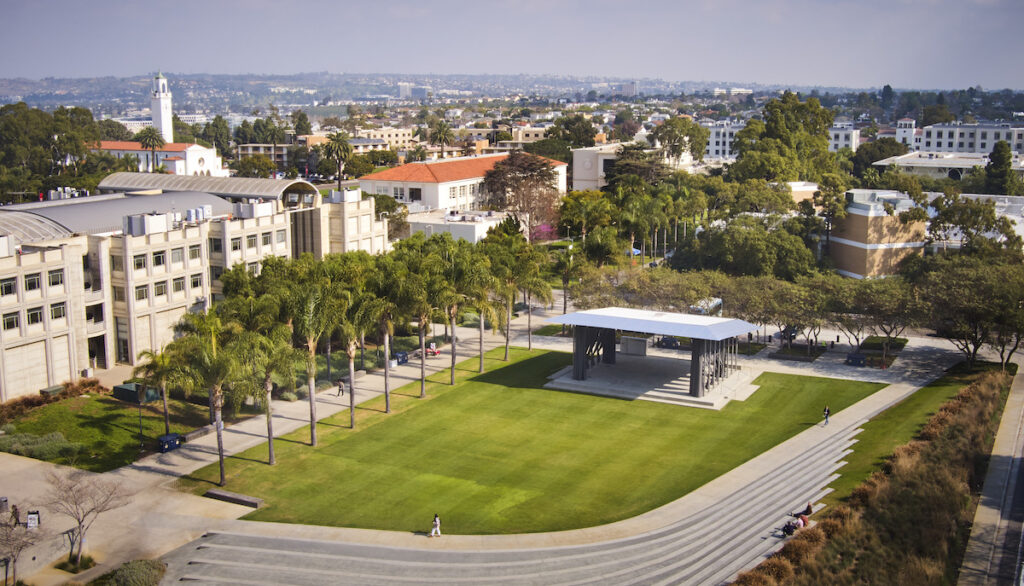
Loyola Marymount University’s Department of Psychological Science resides in the Bellarmine College of Liberal Arts on the Westchester Main Campus in Los Angeles, California. Located at 1 LMU Drive, this department reflects the university’s steadfast dedication to developing ethical leaders for a culturally diverse world.
The psychology program delivers a complete education in the science of psychology. Students pursue academic excellence, advance scholarship, promote service and justice, and embrace lifelong learning. This integrated approach shapes the whole person rather than just focusing on academic achievement.
Students explore human and animal behavior through different viewpoints – biological, psychological, and sociocultural. This multi-layered approach helps them understand complex behaviors by connecting concepts from different content areas. Their studies offer opportunities to apply these viewpoints to individual, family, and community settings.
LMU’s psychology program stands out with its hands-on research experience. Students work alongside faculty on research projects and conduct their own studies under expert guidance. The Summer Undergraduate Research Program (SURP) makes this practical experience possible. Psychology students spend six weeks working on faculty-led research that builds their skills in data analysis, problem-solving, and critical thinking.
The department features accomplished faculty members who specialize in:
- Adulthood and aging
- Mental health across cultural contexts (African American, Asian American, and Latino)
- Behavioral neuroscience
- Clinical psychology
- Cognitive psychology
- Evolutionary psychology
These faculty members present papers at national and international conferences. They lead nonprofits, serve on journal editorial boards, and publish in prestigious outlets like the Proceedings of the National Academy of Sciences.
Students benefit from state-of-the-art laboratory facilities and can join organizations like The Psychology Society and Psi Chi, the international psychology honor society. The Human Subject Pool offers firsthand social science research experience. Students can also participate in innovative projects like LMU’s P.R.O.S.E. (Psychological Research on Synthetic Environments) Project.
This well-rounded education prepares students for graduate study in psychology and related fields. They can also pursue careers where understanding human behavior proves valuable.
Programs offered
LMU’s psychology department runs undergraduate and graduate programs that give students a complete knowledge of psychological theory, research methods, and real-life applications. The curriculum goes beyond what the American Psychological Association requires.
Students pursuing a Bachelor of Arts in Psychology get into multiple aspects of behavior—biological, clinical, cognitive, developmental, and social. This all-encompassing approach helps you understand human behavior and mental processes. Small faculty-to-student ratios create an environment where you receive personal attention.
LMU offers these specialized tracks to match your career goals:
- General Psychology Track
- Counseling & Practice Track
- Research/Cognitive Track
- Pre-Medical Track
- Pre-Medical PA Track
Each track lets you customize your education based on whether you want to practice clinically, conduct research, or attend medical school.
The department also has two minor options if you’re majoring in something else:
- Psychology Minor: You’ll need Introduction to Psychology plus two elective psychology courses (any level) and three upper-level electives
- Applied Developmental Psychology Minor: This one centers on developmental psychology
The graduate program offers a Master of Science in Psychology with two paths. The General Track opens doors to behavioral science careers or doctoral programs (Ph.D./Psy.D.). Students interested in forensics can take the Forensic Psychology track, which blends psychology and criminal justice coursework.
You can finish either graduate track in 16 months. The curriculum ranges from statistical analysis to applied psychology and covers teaching methods, legal and ethical issues, and addiction.
LMU’s programs emphasize using psychological knowledge to help people, communities, and society. Students learn research skills they can apply to ground situations.
Psychology majors take core courses like Statistical Methods for Psychology, Research Methods, Brain and Behavior, and Critical Thinking in their first two years. Advanced courses include Cognitive Neuroscience, Social Psychology, and various electives. A capstone project and senior assessment wrap up the degree requirements.
The psychology curriculum spans specialized areas such as personality theories, abnormal psychology, child and adolescent development, neuropsychology, cognitive psychology, educational psychology, health psychology, and psychological tests and measurements. This prepares you for both immediate careers and graduate studies.
Students switching to psychology from other majors need a minimum C grade in General Psychology and a 3.0 cumulative GPA.
Online options
LMU students can choose between online learning and traditional in-person classes. The School of Education now offers a fully online School Psychology Program that matches its on-campus version in quality and results.
The online and on-campus School Psychology Programs share similar admission requirements, course structures, standards, and graduation criteria. Students in both programs receive the same high-quality education. The online program’s approval from the National Association of School Psychologists (NASP) validates its professional standards.
California Residency Requirement
The School Psychology Program requires all students to live in California while studying, even though classes are online. California’s credentialing rules make this necessary so students can complete their fieldwork within the state.
You might find the online School Psychology Program perfect if:
- Your home is outside Los Angeles or campus commuting isn’t practical
- Technology-based learning suits you and you can participate through Zoom or similar platforms
- Virtual communication works well for you to build relationships with classmates and professors
LMU’s online psychology courses feature a balanced approach – at least 50% of each course happens live. This setup lets students interact directly with professors and peers while keeping their schedules flexible.
Canvas serves as LMU’s main learning management system. Students use this platform to access materials, turn in assignments, check grades, and connect with instructors and classmates. Since 2013, LMU has built a resilient digital infrastructure and keeps expanding its online capabilities.
LMU psychology education comes in several formats beyond the School Psychology Program. The counseling programs mix hybrid courses with fully online and in-person options. Students get tailored learning experiences that match different course content.
Online students must complete the same 63 course units as their on-campus peers. The fieldwork requirements stay similar whatever the program format, which gives all students consistent professional preparation.
Accreditation
Quality indicators matter when you choose a university program, and accreditation tops the list. Loyola Marymount University has earned several prestigious accreditations that confirm its psychology programs’ excellence. Your degree will be accessible to more people because of these credentials.
LMU has earned accreditation from the WASC Senior College and University Commission (WSCUC). This regional accreditation shows that LMU meets strict standards for academic quality, institutional effectiveness, and student success. Professional peers have given their seal of approval, which means the university meets quality standards in programs and departments of all sizes.
LMU’s program has full accreditation from the National Association of School Psychologists (NASP) for students who want to study school psychology. The program renewed this prestigious status in 2018, which runs through 2022. LMU now ranks among just 15 California universities with NASP-accredited School Psychology programs.
Graduates get real benefits from this accreditation. You’ll receive the Nationally Certified School Psychologist (NCSP) credential after completing the NASP-accredited program. This certification lets you practice in other states without extra credentialing – a huge plus if you move after graduation.
The California Commission on Teacher Credentialing (CTC) has approved the School Psychology program. This approval means all credential programs meet California state requirements. The National Association of School Psychologists (NASP) also accredits these programs, which include the MA in Educational Psychology and California Pupil Personnel Services Credential in School Psychology.
Students in the Master of Science in Psychology program benefit from the university’s Southern Association of Colleges and Schools (SACS) accreditation. Graduate and post-graduate institutions will recognize your degree if you pursue advanced studies later. Students at SACS-accredited schools often qualify for special perks like corporate tuition reimbursement.
LMU shows its steadfast dedication to high standards through these multiple accreditation layers. The university goes through regular reviews to keep these designations. Accreditation typically gets renewed every seven years after a full evaluation. This strict oversight means your psychology education at LMU will stay relevant and respected throughout the professional community.
Admission Requirements
LMU’s psychology programs have specific academic standards that vary by program level and type. Students need to review these requirements carefully before they submit their applications.
Current LMU students who want to switch to psychology must complete PSYC 1000 (General Psychology) with a minimum grade of C (2.0). These students must also keep a cumulative GPA of 3.0. This rule applies to undeclared students and students switching from other majors.
The timing to change majors is vital. Students should declare psychology as their major by the end of their first sophomore semester. Any switch after this point might extend graduation beyond four years.
External transfer students need a minimum cumulative GPA of 3.0 in all majors to enter LMU psychology programs. The average incoming GPA stands higher at 3.44. Students don’t need a minimum unit count to apply, but completing 12 transferable units each semester helps ensure they’re ready for academic work.
Psychology transfers under the Transfer Admission Agreement with partner community colleges must meet extra requirements. Students need a 3.25 cumulative GPA and must pass General Psychology and Statistics courses with a grade of “B” or better.
Graduate admission varies by program. The Master of Science in Psychology program looks for candidates with:
- A bachelor’s degree with at least 18 hours in psychology from a regionally accredited institution
- Undergraduate GPA of 2.75 or higher
- Two letters of reference from undergraduate instructors or professional sources
- A personal statement that explains their motivation
The School Psychology program requires:
- A previous major/minor in psychology, child development, education, or related field
- Minimum undergraduate GPA of 3.0
- At least 9 undergraduate semester units of prerequisite coursework for candidates without relevant degrees
Program deadlines vary. The School Psychology program’s priority deadline falls on February’s first Friday, with interviews in early March.
International students must meet extra requirements. They need to prove English proficiency through TOEFL (minimum score of 90 on internet-based test), IELTS (minimum 6.5), or other approved assessments.
Tuition
LMU’s psychology education costs remain below the national average for 4-year private universities. Students will find this prestigious private institution relatively affordable compared to its peers.
The 2025-2026 academic year brings undergraduate psychology majors’ tuition to $64,470 for full-time students with 12 or more semester hours. Each semester costs $32,235. Students enrolled part-time with 11 semester hours or less pay $2,691 per credit hour. This rate shows an increase from $2,404 per credit hour reported in 2022-2023.
Psychology graduate programs follow a different payment structure. School of Education program students pay $1,726 per semester hour. Bellarmine College of Liberal Arts graduate programs, which house most psychology courses, charge $1,632 per semester hour. Advanced psychology studies in doctoral education programs cost $2,151 per unit.
Students need to budget for mandatory fees alongside tuition. Each semester requires a $65 registration fee. Full-time undergraduates pay a $288 student activity fee. Additional charges include a $215 student recreation facility fee and a $140 media fee yearly. Health insurance costs run $1,164 for fall and $1,612 for spring unless students show proof of coverage.
Housing represents a major expense. Students living on campus spend between $13,724 and $21,528 yearly based on their accommodation choice. Meal plan costs range from $5,076 to $6,904 each academic year.
Living arrangements affect the total estimated attendance cost for undergraduates. On-campus residents’ expenses reach $76,966, while off-campus students not living with relatives face costs around $79,307.
Students can access financial help through several options. LMU’s School of Education partnership scholarships help make education more affordable. Psychology students might qualify for California’s Golden State Teachers Grant, offering up to $10,000 in support.
Additional Information
Psychology students at LMU can access state-of-the-art research opportunities through several specialized laboratories. The Brain and Cognition Lab takes a closer look at cognitive abilities with EEG and cardiovascular measurements. Students ended up getting hands-on experience with advanced research techniques.
Valuable internships await students at Blount Memorial Hospital, Helen Ross McNabb Center, and Peninsula Psychiatric Hospital. These placements are a great way to get real-life application of psychological principles in clinical settings.
Students can work on community-based participatory research through the Psychology Applied Research Center (PARC). The center addresses social justice issues in more than 35 communities nationwide. PARC’s current focus includes health, mental health, education, and substance abuse prevention through shared projects.
Psychology graduates find jobs in a variety of fields like marketing, human resources, public relations, healthcare, education, and probation services. Some work as case managers in community mental health centers or psychiatric technicians in rehabilitation facilities. Yes, it is common to see alumni working in community mental health, substance abuse counseling, corrections, and school psychology.
The program’s graduates smoothly transition to prestigious graduate programs in clinical psychology, social work, public health, medicine, law, and business administration. The Career & Professional Development office helps with career coaching, and the Psychology Village bulletin board keeps students updated with career information.