
CSU Stanislaus Psychology Programs
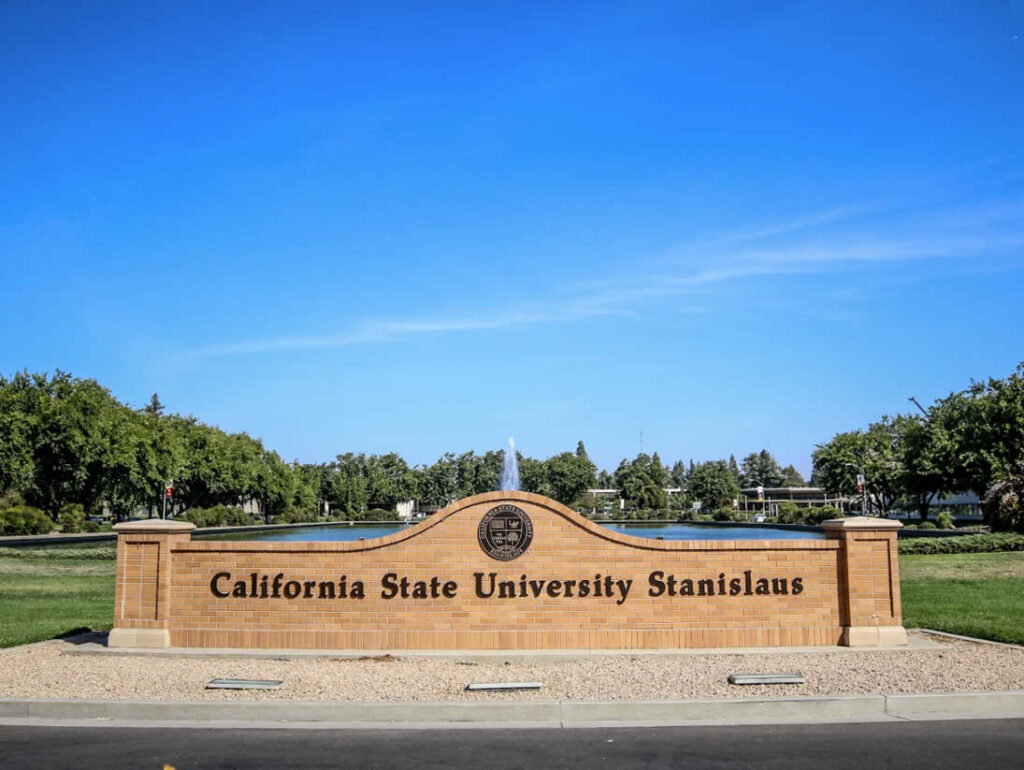
CSU Stanislaus, commonly known as Stanislaus State or Stan State, serves as the primary educational institution in Turlock, California. This 67-year-old public university has grown into a respected member of the California State University system, serving 9,265 students as of Fall 2024. Students enjoy an intimate learning environment on the 228-acre campus in a small suburb setting, which houses 8,201 undergraduates and 1,064 postgraduate students.
The Psychology Department at CSU Stanislaus has earned a sterling reputation for academic excellence and student-centered learning. Department Chair William F. Potter leads the department from its location in Bizzini Hall within the College of Science. The department’s reliable faculty represents a variety of specializations within the psychology discipline.
CSU Stanislaus Psychology program’s dedication to scientific principles and research methodologies sets it apart. Students learn the central role of empirical investigation in understanding human behavior. This scientific foundation prepares them for careers requiring people skills and behavioral analysis, and advanced graduate studies at master’s or doctoral levels.
Students and faculty cooperate to analyze and research behavioral problems using theoretical frameworks and empirical tools. This hands-on approach helps develop critical thinking abilities and practical research skills. The department’s teaching strategies rely on scientific learning principles that allow students to assess their progress and refine their understanding of psychological concepts.
Research serves as the foundation of the undergraduate psychology experience at Stanislaus State. Students begin with foundational coursework in psychological methods and advance to upper-division experimental design classes with integrated lab components. Faculty members encourage a shared research environment by involving undergraduates in ongoing projects. Students present their findings at bi-annual research conferences.
The Psychology Department’s connections with professional organizations are a great way to get networking opportunities and resources. These organizations include the American Psychological Association, California Association of Marriage Family Therapists, and the Behavior Analyst Certification Board.
CSU Stanislaus maintains reasonable tuition rates compared to similar programs while investing in quality education with its $177.60 million institutional budget (2024-25) and $20.50 million endowment (2023-24).
Programs offered
CSU Stanislaus Psychology Department provides a complete range of academic programs that help students achieve their goals, whether they want to start professional practice or pursue advanced graduate education.
Students can earn a Bachelor of Arts in Psychology with optional concentrations in Developmental Psychology or Experimental Psychology. The Developmental Psychology concentration equips students with skills needed for careers in child development centers, child welfare clinics, and related agencies. Students also gain strong academic foundation to pursue graduate work in Developmental Psychology. The Experimental Psychology concentration helps students who plan to pursue graduate training in experimental or clinical psychology by providing strong background in statistics and experimental methodology.
Stanislaus State’s undergraduate students have several program choices available. These include a Psychology minor, Bachelor of Arts in Social Sciences with an interdepartmental major in Psychology, Bachelor of Arts in Child Development, and a Minor in Child Development.
The Psychology Department offers three distinct master’s degree options at the graduate level:
The Master of Arts in Psychology: General requires 30-semester units and prepares students for doctoral programs or college-level teaching and research. Students work closely with faculty in specific areas of psychology through this research-oriented program. Most full-time students finish this degree in two years.
The Master of Arts in Applied Behavior Analysis is a 40-semester unit program that prepares students to become Board Certified Behavior Analysts (BCBA). The program includes the Behavior Analysis Certification Board (BACB) Verified Course Sequence required for the BCBA certification exam. Students learn theoretical concepts in Radical Behaviorism, clinical behavior analysis, and experimental analysis of behavior. Full-time students can complete this program in four semesters.
The Master of Science in Psychology features two specialized tracks:
- The Counseling track (60 semester units) prepares students to become Marriage and Family Therapists
- The Behavior Analysis track (61 semester units) prepares students for dual roles as both behavior analysts and therapists
Both MS tracks meet California’s educational requirements for Marriage Family Therapist (MFT) licensure. Full-time students can complete the MS degree in about five semesters or 2.5 years.
The department’s steadfast dedication to scientific principles and research methodologies runs through all psychology programs. Graduate students experience the same hands-on, research-oriented approach as undergraduates, with advanced and specialized training aligned with their career goals.
Online options
Students at Stanislaus State can access limited but valuable online options for psychology studies. The digital world works through the CSU system’s shared approach rather than standalone distance education programs.
CSU Stanislaus students can join the CSU Fully Online program. This program lets you take one online course from any of the CSU’s 23 campuses while studying at your home campus during fall or spring semesters. You won’t pay extra tuition beyond your regular full-time fees. This gives you access to specialized psychology coursework unavailable at Stanislaus.
The program has specific eligibility requirements:
- You must complete one term as a matriculated student with at least 12 units at your home campus
- You need to keep a minimum 2.0 GPA and good academic standing
- You should be enrolled at your campus while taking the fully online class
- Your full-time student tuition must be paid
Transfer students get special treatment. You can skip the 12-unit requirement and start in your first semester if you meet other criteria.
Most online courses run asynchronously. This means no scheduled meeting or exam times, which helps you balance psychology studies with other commitments.
Keep in mind that Stanislaus State faces some online program restrictions. The university “is not authorized to offer online instruction or degree programs for students residing outside of California”. State and federal rules require colleges to get special authorization for distance education in other states. These rules change often, which affects exemption status or follow-up requirements.
Summer terms work differently – the CSU Fully Online program isn’t available. You’ll need to enroll directly through the host campus and pay standard per-unit tuition for summer psychology courses online.
Online psychology courses need different skills than traditional classes. You’ll need self-discipline, strong time management, and digital literacy to succeed. CSU asks students to complete a self-assessment before enrollment to check their readiness for online learning.
Your home campus provides academic advising. Talk to psychology department advisors about fitting online courses into your degree plan before taking classes at other CSU institutions.
Accreditation
Your psychology education at CSU Stanislaus stands on a strong foundation of external validation through accreditation. CSU Stanislaus, a 60-year old institution, has managed to keep continuous accreditation from the Western Association of Schools and Colleges (WASC) since 1963. This ensures the institution meets strict educational standards in all its programs.
The university currently holds an “Accredited” status. This reflects the Commission’s confirmation that CSU Stanislaus meets all required standards. The last commission action took place on June 28, 2019. The next accreditation cycle will begin with an Offsite Review in Fall 2026, followed by an Accreditation Visit in Spring 2027.
CSU Stanislaus shows its steadfast dedication to excellence in each academic department. Psychology students benefit from several specialized accreditations that add value to their degree:
- The Behavior Analysis Track has accreditation from the Association for Behavior Analysis and fulfills all course requirements for the Behavior Analysis Certification Board (BCBA certification)
- The Psychology program has American Psychological Association (APA) accreditation
This layered accreditation system guarantees quality education that helps your future career prospects. The university’s ongoing participation shows its commitment to high educational standards in psychology and related fields, especially since accreditation is optional.
External reviewers assess everything from academic quality to teaching consistency. WSCUC teams visit the campus regularly to conduct open forum meetings with students, staff, and faculty. These evaluations look at academic standards, student support services, and the accuracy of information from the institution.
Students play a vital role in this process. You can share your educational experiences during these accreditation reviews. WSCUC knows not everyone can attend these meetings, so they set up confidential email accounts for additional feedback.
These accreditations matter beyond just the institution’s reputation. As a psychology student, your degree from an accredited program boosts your credibility with employers and graduate schools. Many professional certifications and licenses require completion of accredited programs, making these credentials vital for your career growth in mental health fields.
Admission Requirements
CSU Stanislaus Psychology programs have specific admission criteria based on your educational goals. The CalStateApply platform now lets you submit applications to both university and department at the same time.
Students seeking undergraduate psychology admission must meet the university’s basic requirements. You need a minimum 2.5 GPA from your undergraduate work or last 60 units. The psychology major requires you to complete key foundation courses: Introduction to Psychology (PSYC 2010), Introduction to Psychological Methods (PSYC 2020), and Statistics (MATH 1600).
Graduate programs demand higher standards. Stanislaus State’s psychology master’s programs require:
- A bachelor’s degree (preferably in Psychology)
- Minimum 3.0 overall GPA
- Three letters of recommendation
- Submission of a personal statement
- Approval by the Psychology Department
Each graduate concentration needs specific prerequisite courses. The MA in Psychology: General needs an upper-division course in experimental psychology. Students pursuing MA in Applied Behavior Analysis need coursework in applied behavior analysis or experimental analysis of behavior. The MS programs in Counseling and Behavior Analysis tracks need prior courses in abnormal psychology, counseling theory, and counseling techniques.
The application process is now more available since GRE scores are no longer required for psychology graduate programs. Your personal statement should explain your interest in the field, show your understanding of the professional role, and highlight why you chose Stanislaus State. You should also describe your training and experiences that make you an ideal candidate.
Students who lack prerequisites might receive conditional admission. They need to complete the missing courses by their first semester’s end. The program takes about 6 weeks to review applications after the deadline. Most applicants then go through program interviews, except Liberal Studies majors who submit faculty recommendations instead.
Tuition
Financial planning is a vital part of your educational experience at California State University, Stanislaus. Psychology students need to understand the cost structure to prepare for their academic investment.
The 2024-2025 academic year at CSU Stanislaus will cost California residents approximately $7,830 in tuition and fees. Non-California residents will pay an extra $12,600 for full-time enrollment, at $420 per unit. Here’s the simple breakdown for undergraduate tuition based on enrollment status:
- Full-time undergraduates (6.1+ units): $3,042 per semester or $6,084 annually
- Part-time undergraduates (0-6.0 units): $1,764 per semester or $3,528 annually
Graduate psychology students pay higher rates. The Master of Arts programs in Psychology and Applied Behavior Analysis cost $3,804 per semester for full-time students (6.1+ units) or $2,208 for part-time enrollment. This means full-time graduate students pay $7,608 annually.
CSU Stanislaus helps students manage these costs through an Installment Payment Plan that splits tuition into four monthly payments. The first installment combines one-quarter of tuition costs, the full Health Services Fee, a $33 non-refundable administrative fee, and a $2 student involvement fee.
Students can access various financial support options. The State University Grant helps eligible California residents pay tuition fees without needing to repay. The Middle Class Scholarship supports undergraduate students from families earning up to $234,000 (for 2025-2026) or $226,000 (for 2024-2025).
Tuition rates might change during your psychology degree program. The CSU system approved multi-year tuition increases on September 13, 2023. Students should apply early for financial aid through FAFSA or CADAA applications. The filing period runs from December 1, 2024, to June 30, 2026.
Additional Information
CSU Stanislaus Psychology Department offers valuable opportunities beyond academic coursework to improve your educational experience. The SONA Systems online participant management system serves as the main activity where you get hands-on experience with psychological studies. Students can earn potential extra credit while contributing to ongoing psychological research through this platform.
Here are the key SONA dates for Fall 2025:
- Last day to participate in studies: December 1
- Last day for researchers to grant earned credits: December 3
- Last day to assign credits to classes: December 5
Students can also join Psi Chi, the psychology honor society at CSU Stanislaus. This organization promotes scholarship in psychology and provides great networking opportunities. Your professional connections and knowledge of the field will grow through active participation.
The Counseling and Psychological Services (CAPS) center supports the campus community through advocacy, consultation, and confidential mental health services. Students receive culturally responsive support as CAPS welcomes principles of equity and inclusion.
The Career & Professional Development Center helps psychology students with specialized assistance for resumes, interview preparation, and job searches. Students can get one-on-one career coaching during walk-in hours on Tuesdays (10:30am-12pm) and Wednesdays (1:30pm-3pm), or schedule appointments through HireStanState.
Psychology students can apply classroom knowledge in real-life settings through internship opportunities while building professional networks. Students have completed internships in a variety of organizations including hospitals, non-profit organizations, human resource departments, and mental health agencies.