
California Lutheran University Psychology Programs
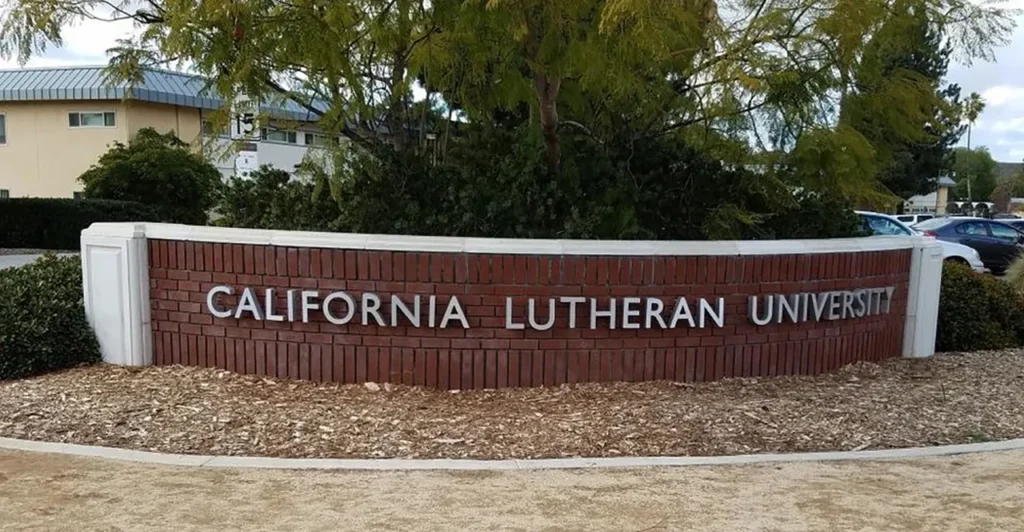
California Lutheran University is a private school located in Thousand Oaks, California, just 40 miles northwest of Los Angeles. The school opened its doors in 1960 as California Lutheran College, becoming the first four-year liberal arts college in Ventura County. The institution changed its name to California Lutheran University on January 1, 1986, reflecting its development into a more detailed institution.
The Psychology Department operates within the College of Arts and Sciences and helps students understand human thought, emotion, and behavior. This department serves as the core of the university’s liberal arts mission and gives students opportunities to explore human psychology through theory and hands-on experience.
The main campus spans 290 acres in a suburban setting, with satellite locations in Woodland Hills, Westlake Village, Oxnard, Santa Maria, and Berkeley that serve students of all backgrounds. Purple and gold represent the university’s colors, and its athletic teams compete in NCAA Division III as the Kingsmen (men) and Regals (women).
Expert faculty members are the foundations of Cal Lutheran’s psychology education. Dr. Jodie Kocur, who earned her Ph.D. from Colorado State University, leads the department as chair. Dr. Rainer Diriwächter and Dr. Andrea J. Sell bring their expertise in research development and support. The department combines full-time professors with adjunct faculty who share their real-life experience in the classroom.
The Graduate School of Psychology features accomplished faculty members in various psychological fields. Dr. Jamie Banker specializes in systems theory and medical family therapy, Dr. Jamie D. Bedics focuses on psychotherapy process and personality disorders, and Dr. Ryan N. Sharma studies clinical issues in fire service and first responders.
The university’s endowment reached $115.40 million in 2020, which supports academic programs and student services. Currently, 2,888 undergraduates and 1,394 postgraduates study here, with 437 academic staff members teaching them (193 full-time and 244 part-time).
Cal Lutheran is a Hispanic-Serving Institution with ties to the Evangelical Lutheran Church in America, though it remains nonsectarian in practice. The university values diversity, inclusion, and belonging. The Western Senior College and University Commission (WSCUC) accredits the university, ensuring high-quality education across all programs, including its psychology offerings.
Programs offered
California Lutheran University’s psychology programs provide a complete education path from undergraduate to doctoral levels. Students can build a strong academic foundation to become psychology professionals.
Cal Lutheran students can choose between Bachelor of Arts and Bachelor of Science degrees in psychology. The BA program suits students who plan careers in community service centers, social work, clinics, and business settings. The BS track attracts students who want to pursue clinical practice and research-oriented professions.
Students can tailor their psychology major through seven specialized emphasis areas:
- Clinical and Behavioral Applications (preparing for clinical, counseling or school psychology)
- Business/Organizational Applications (focusing on management and human resources)
- Family and Child Development Applications (concentrating on interpersonal relationships)
- Health and Wellness Applications (learning psychology’s role in physical health)
- Law and Criminal Behavior Applications (examine psychology within criminal justice)
- Psychobiology Applications (combining biology and psychology)
- Sports Psychology Applications (applying psychological principles to athletics)
Cal Lutheran’s Graduate School of Psychology offers three distinct programs. The MS in Counseling Psychology (MFT) takes two years to complete with 60 credit hours. Students work in cohorts of about 25 and must complete 225 hours of practicum experience. This program prepares graduates to become licensed Marriage and Family Therapists.
The MS in Clinical Psychology program takes two years with 37 credit hours (40 with thesis) and cohorts of about 15 students. Students learn research methodology and evidence-based psychotherapy training. Graduates can pursue doctoral programs or research-related jobs in health settings.
The university’s APA-accredited PsyD in Clinical Psychology program requires 114 credit hours over five years. Students work in cohorts of 17 and must complete 1,200 practicum hours plus 1,500 doctoral internship hours. Graduates can become licensed Clinical Psychologists.
Students in the MS in Counseling Psychology program can specialize in Psychological Trauma, Attachment Theory, Recovery Model, Latino/a Counseling, and Family Mediation. These six-credit specializations help students develop expertise in specific clinical areas.
The psychology graduate programs are at the Thousand Oaks campus. MFT students can also study at the Oxnard Center. Students benefit from small class sizes, dedicated faculty, and modern facilities.
Cal Lutheran’s program success shows in its graduate numbers. In 2022, 14 students earned master’s degrees in clinical psychology and 11 received doctoral degrees in psychology-related fields.
Online options
Cal Lutheran University lets you pursue your psychology education online without putting your career or personal life on hold. The university’s degree programs offer online formats that work around your schedule and life commitments.
Psychology students at the undergraduate level can enroll in the Bachelor of Arts in Psychological and Behavioral Science (PROS) program. You’ll have the choice between online courses or attending classes at the Thousand Oaks campus, where evening sessions run once a week (Monday through Thursday). Students can study part-time or full-time and complete their degree in as little as 18 months. The university even lets prospective students test the waters by sitting in on live online or on-campus classes before they commit.
Cal Lutheran’s online learning stands out with:
- Practical training focused on your prospective profession
- Strong professional networks and small class sizes
- Highly respected degrees valued by employers
- An inclusive community that values different viewpoints and backgrounds
The university’s online education has grown rapidly over the last several years. Student numbers tell the story – 4,023 students took at least one online class during 2019-2020, and 3,730 students (92.62%) completed all their courses online. Graduate students made up 1,219 of these learners, with 94.03% (1,150) choosing to study exclusively online.
These numbers represent a big deal as it means that more students are choosing online learning. Just a year before, in 2018-2019, only 369 students took online classes. This growth shows how much Cal Lutheran has invested in building strong online learning options.
Students get the same high-quality education online as they would on campus. Classes employ PowerPoint presentations, lecture notes, PDF readings, and audio/video content through the university’s learning system. Live virtual classrooms typically run after 4 pm Pacific time on weekdays, making it easier for working professionals to attend.
Cal Lutheran’s online programs give you access to quality psychology education regardless of where you live or your schedule. Students get a rigorous academic experience and personal connections in a flexible digital environment.
Accreditation
California Lutheran University’s steadfast dedication to educational excellence stems from its rigorous accreditation standards. The university has managed to keep full accreditation from the Western Association of Schools and Colleges (WASC) since its original recognition in 1962. Cal Lutheran now holds accredited status with the WASC Senior College and University Commission, suggesting compliance with all required standards.
The Graduate School of Psychology’s Doctor of Clinical Psychology (PsyD) program earned full accreditation from the American Psychological Association (APA). The recognition came in 2015 after a detailed evaluation process that started when the program became eligible to apply in 2014. APA’s Commission on Accreditation visited the site in April 2015 and granted the program’s original accreditation.
The PsyD program received re-accreditation for the maximum period of 10 years on May 2, 2025. The next site visit will take place in 2034. This extended period represents the highest possible confidence vote from the accrediting body and reflects the program’s exceptional quality.
The PsyD program meets the Association of State and Provincial Psychology Boards/National Register (ASPPB/NR) “Guidelines for Defining a Doctoral Degree in Psychology”. This qualification proves most important for graduates because it typically fulfills educational requirements for psychology licensing across the United States and Canada. Specific licensing requirements differ by jurisdiction, so graduates should verify exact requirements with their state or provincial licensing boards.
Cal Lutheran’s other program-specific recognitions include:
- The Graduate School of Education’s authorization from the California Commission on Teacher Credentialing
- The School of Management’s accreditation from the Accreditation Council for Business Schools and Programs (ACBSP)
- Pacific Lutheran Theological Seminary’s accreditation from the Commission on Accrediting of the Association of Theological Schools
These accreditations ensure your degree meets quality educational standards and prepares you professionally. APA accreditation tells employers, licensing boards, and doctoral programs that graduates completed a program meeting clinical psychology education’s highest standards.
Students can ask about the PsyD program’s accreditation status through the Commission on Accreditation at the American Psychological Association’s Office of Program Consultation and Accreditation in Washington, DC.
Admission Requirements
Cal Lutheran University’s psychology programs have specific admission criteria that vary by academic level. The university looks at multiple factors beyond simple requirements through a complete review process.
Psychology programs for undergraduate transfer students at Cal Lutheran have these preferred criteria:
- College-level freshman English with a grade of “C” or better
- Successful completion of intermediate algebra (prerequisite for all college-level math)
- Preferred minimum of 30 transferable units (high school transcripts required if fewer)
- Minimum 2.75 transferable GPA
Students applying to the Bachelor’s Degree for Professionals program need at least 24 transferable credits and significant work experience. Transfer students can get preliminary transcript reviews to check their standing before submitting a formal application.
Graduate psychology programs at Cal Lutheran have their own admission standards. The PsyD in Clinical Psychology asks for a 3.0 or better cumulative undergraduate GPA, or a 3.5 or better overall graduate GPA. The doctoral program values research and field experience during candidate evaluation.
Fall semester marks the start of all psychology graduate programs—including MS in Clinical Psychology and MS in Counseling Psychology (MFT). Students should submit applications by January 15 for priority consideration in the MS in Counseling Psychology program’s fall intake.
International students must meet extra requirements, especially with English proficiency. TOEFL or IELTS scores are required along with financial documents that prove sufficient funds for tuition and living costs.
Cal Lutheran accepts about 75.04% of transfer applicants, making admission competitive but available. Students should create strong applications that showcase their academic achievements and relevant experience.
Students can contact the transfer office at transfer@CalLutheran.edu for credit evaluation or preliminary transfer credit assessment.
Tuition
Students looking to pursue psychology education at California Lutheran University need to understand the detailed fee structure and financial support options. The 2025-2026 academic year brings specific tuition rates based on program levels and specializations.
The MS in Clinical Psychology and MS in Counseling Psychology programs cost $940 per credit. Students pursuing the doctoral PsyD in Clinical Psychology pay $1190 per credit. This higher rate reflects the advanced training the program provides. These rates cover direct educational costs, but students need to account for additional fees.
Psychology students must budget for these mandatory fees:
- Technology Fee: $100 per term
- Wellness Fee: $80 for Fall/Spring semesters, $40 for Summer term
- Application Fee: $32 online or $65 paper ($85 for PsyD paper applications)
- Enrollment Deposit: $300 (required upon acceptance)
MS in Counseling Psychology students pay an extra Practicum Fee of $515 per credit. PsyD students have additional costs that include an Assessment Lab Fee ($565) and Practicum Fees between $495 and $1030 per semester.
Cal Lutheran believes that “finances should not be a barrier to investing in your future” and offers significant financial support. The university’s commitment shows in its aid distribution. During 2021-2022, undergraduate psychology students received an average of $4,116 in state and local grants and $12,500 in institutional grants.
Psychology students can access several scholarship opportunities. The CLU Presidential Scholarship covers 100% of tuition, while the CLU Guarantee Scholarship provides $22,605. Students can also apply for specialized awards like the Alumni Scholarship ($1,000) and Visual and Performing Arts Scholarship (up to $6,000).
The university caps the total financial aid at tuition cost. Students should check their school email regularly because the university sends all financial aid information through this channel.
Additional Information
Psychology students at Cal Lutheran gain more than just classroom education through extensive research and professional growth opportunities. Students can build their research portfolio by joining faculty-led research teams, taking specialized courses, or participating as research subjects.
Dr. Nicole Talarico helps students arrange internship placements that count toward academic credit. Students earn one credit for every 60 hours of work. These experiences provide significant ground application of psychological concepts.
The career prospects for psychology graduates look promising. About 93% of graduates find jobs within their first year, and this number increases to 94% five years after graduation. Their earning potential grows substantially too.
Doctoral psychology students show strong completion rates. The data reveals that 52% complete their program in 5 years, with students taking an average of 5.82 years to finish. Success continues after graduation – 86% of graduates between 2014-2024 obtained their psychologist license.
Students receive tailored attention and career guidance throughout their academic journey. A graduate shared their experience: “The small class sizes and close relationships I developed with faculty gave me the resources and support to achieve my goals at CLU!”