
Azusa Pacific University Psychology Programs
Azusa Pacific University’s Department of Psychology thrives as a vibrant community of scholars. Students get the detailed understanding of psychological principles through academically rigorous coursework. The program combines laboratory research, internships with community agencies, and individual research projects. These elements prepare graduates for competitive careers and top graduate school programs.
Students learn from expert faculty members who bring diverse perspectives to the classroom. The department promotes spiritual growth through faith integration and pastoral care. This steadfast dedication has earned APU a spot among the Top 75 Addiction Studies Programs nationwide.
The university’s psychology programs include both Bachelor of Arts (BA) and Bachelor of Science (BS) degrees. Students in the BA program study human behavior and cognition. The BS program focuses on the human brain and psychological research. Both degrees offer chances to work directly with faculty members in research and field experiences. The 10:1 student-to-faculty ratio ensures students receive tailored attention throughout their academic experience.
APU has created a bachelor’s completion program in psychology for transfer students with at least 15 units. Students can choose from multiple regional locations or online options, with flexible full-time and part-time schedules.
The university’s Doctor of Psychology (PsyD) in Clinical Psychology program prepares future licensed psychologists to work in psychotherapy, psychological assessment, and clinical research. This APA-accredited program emphasizes systems approaches, diversity and justice, and integrates faith/spirituality with practice. The curriculum includes three years of practicum and a full-time, year-long internship, totaling at least 1,800 hours.
APU’s psychology programs stand out because of their practical approach. More than 60% of psychology students work in practicums across Southern California. This gives them exceptional ground experience. Students build their résumés through relevant internships, explore Christian faith’s connection to psychology, conduct research with faculty mentors, and study human behavior in various settings.
The Community Counseling Center serves as a multidisciplinary mental health and training site. Student therapists help treat a wide range of issues at competitive low costs. This hands-on experience enriches their practical learning significantly.
School info
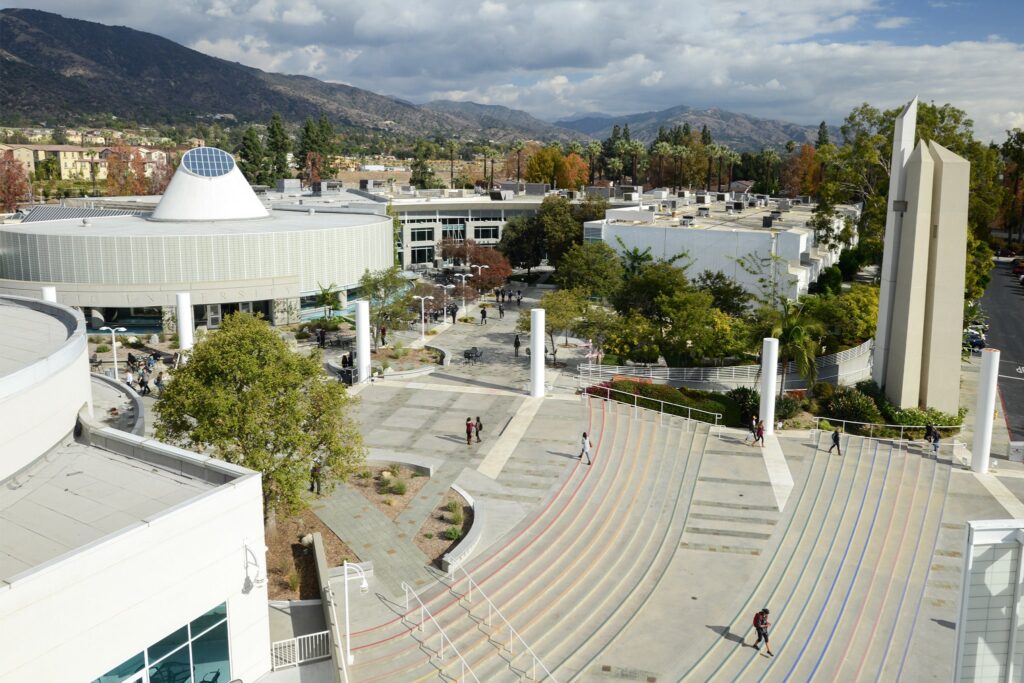
Azusa Pacific University sits on a beautiful campus at 901 E. Alosta Avenue in Azusa, Southern California. The Department of Psychology makes its home in the Wynn Academic Center. Students and visitors can find the university open Monday through Friday.
APU’s psychology department stands out for its dedication to turning students into disciple-scholars through faith integration. Faculty members go beyond academic teaching to promote spiritual growth through pastoral care. This integrated approach helps students thrive in their careers while making meaningful societal contributions.
Students can reach the psychology department by phone or email. The department’s office hours match the university’s schedule to support students throughout their academic trip.
APU demonstrates strong dedication to diversity and inclusion. The university welcomes students whatever their race, color, national or ethnic origin, and gives everyone equal access to programs, privileges, and activities. This policy covers educational guidelines, admissions, scholarships, and all university programs.
Students benefit from excellent psychology facilities that improve their learning experience. The 34-year-old Community Counseling Center (CCC) serves as a multidisciplinary mental health and training site. Students gain practical experience here while providing mental health services and psychological assessments at competitive rates.
The University Counseling Center (UCC) adds another valuable resource by offering counseling services. These services promote psychological, social, and spiritual wellness through a Christian point of view. The International Association of Counseling Services (IACS) accreditation proves UCC’s professional excellence.
APU’s “God First” motto dates back to 1899 and continues to shape the 2025-26 academic year by blending faith-based values with psychological education. This combination creates a unique learning environment where students develop professional expertise alongside spiritual awareness.
WASC Senior College and University Commission (WSCUC) accreditation backs the university’s academic standing. This ensures psychology programs meet high educational standards and prepare graduates well for careers or advanced studies.
Programs offered
Azusa Pacific University’s Department of Psychology has created several academic paths to help students launch their careers in psychology. Students can choose between two undergraduate degrees: a Bachelor of Arts (BA) in Psychology or a Bachelor of Science (BS) in Psychology. The BA program helps students understand human behavior and cognition, while the BS program focuses on the human brain and research methods.
APU welcomes transfer students with 15+ college credits through its Bachelor’s Completion Program in Psychology. Students can attend classes at several locations including High Desert, Inland Empire, Monrovia, Murrieta, Orange County, and San Diego. The program offers both full-time and part-time options, with online classes available.
Students get hands-on field experience as they learn to analyze human behavior in different settings. The psychology bachelor’s programs need 48 program units, and students must complete 120 units to graduate. Students from other majors can also pick up minors in Psychology or Alcohol and Drug Counseling.
The department’s premier graduate program is the Doctor of Psychology (PsyD) in Clinical Psychology, which has American Psychological Association accreditation. Students typically finish this 133-unit program in 5-6 years. The PsyD curriculum emphasizes three key areas:
- Systems approach (Family Psychology)
- Diversity and justice
- Integration of faith/spirituality and practice
The department also offers a Master of Science in Counseling Psychology with focus on children and adolescents. This 60-unit program teaches clinicians to work with general populations while becoming experts in childhood trauma recovery, youth substance abuse, and play therapy.
Many psychology careers need professional licenses, so APU’s programs meet educational requirements for certification. The MS in Counseling Psychology prepares students for Licensed Professional Clinical Counselor (LPCC) licensure in California. The PsyD program meets California’s psychology licensure requirements.
Online options
Azusa Pacific University’s online psychology programs give students the flexibility they need in their educational path. These programs maintain the same academic standards as traditional campus-based courses.
The online Bachelor of Arts in Psychology program takes a closer look at developmental psychology, organizational psychology, and abnormal psychology. Students learn to apply behavioral science in many different settings. This program helps highly motivated students build a strong foundation in psychological science. It prepares them for careers in human services, counseling, education, law enforcement, and management.
The online Master of Arts in Psychology blends scientific theory, academic research, scholarly writing, and applied skills in a flexible learning environment. Students work with passionate peers and instructors to advance psychological research and apply their findings in different contexts.
These online programs shine when it comes to scheduling flexibility. Courses start monthly and run for 8 to 16 weeks. Students can move through their education at a pace that fits their personal and work commitments.
APU offers two online learning formats:
- Online Asynchronous: Students complete all coursework online without scheduled meeting times. They learn independently through Canvas and can access course materials 24/7 based on their schedule.
- Online Synchronous: These fully online courses need live participation through videoconferencing (like Zoom). Students get the best of both worlds – remote learning convenience and live interaction benefits.
APU also offers an online bachelor’s completion program in psychology for transfer students with at least 15 units. Students can choose from multiple regional locations. The Master’s in Counseling Psychology program features online synchronous classes during fall and spring terms through scheduled Zoom sessions.
Canvas, APU’s learning management system, supports students throughout their online programs. The platform connects them with professors, helps with assignments, and enables discussions and collaboration with classmates. Online students experience APU’s Christ-centered approach that supports both their academic growth and spiritual development.
Students need a computer with reliable internet access and should feel comfortable using online platforms. Each three-credit course typically requires about nine hours of weekly homework.
Accreditation
Azusa Pacific University maintains high academic standards with its institutional accreditation from the WASC Senior College and University Commission (WSCUC). This regional accrediting agency serves public and private higher education institutions of all types throughout California, Hawaii, and the Pacific region. The university received its original WSCUC accreditation in 1961. It goes through complete reviews regularly to reaffirm its status.
APU’s current accreditation status shows as “Accredited with Notice of Concern” as of June 28, 2024. While the institution meets WSCUC standards now, some areas need attention. The university will have its next special visit in Spring 2026. An offsite review will follow in Fall 2029, with an accreditation visit in Spring 2030.
The Doctor of Psychology (PsyD) in Clinical Psychology program has earned specialized accreditation from the American Psychological Association (APA) Commission on Accreditation. This recognition confirms the program meets quality standards outlined in the APA Guidelines and Principles for Accreditation of Programs in Professional Psychology.
The School Psychology program at APU has also earned accreditation from the National Association of School Psychologists (NASP). This vital credential helps students pursue licensure as educational psychologists in California.
APU has earned 13 professional accreditations across its schools and colleges. These accreditations help qualify the institution for federal funding programs. They ensure students can access federal financial aid and confirm that the university fulfills its educational mission.
Credits earned at APU might transfer to other institutions. However, the receiving college or university makes the final decision about accepting these credits. Students who plan to transfer should contact their target institutions first. This helps them know if their APU credits and degrees will transfer successfully.
Admission Requirements
Azusa Pacific University’s psychology programs have different admission requirements based on academic levels. These requirements are specific to undergraduate, transfer, and graduate applicants.
Your application process for undergraduate psychology programs depends on your status as a first-time freshman, transfer, or international student. The university assesses your academic performance and personal qualities to determine if you’ll succeed in the program.
Transfer students who want to join the bachelor’s completion program in psychology need at least 15 transferable units from regionally accredited institutions with a C- grade or better. The program asks you to submit:
- Application with $45 nonrefundable fee
- Official transcripts from all previous institutions
- Written statement about your interest in psychology and career goals
- Minimum 2.0 cumulative GPA
Students with a GPA of 2.5 or higher typically get regular admission. Those with GPAs between 2.0-2.49 might get conditional admission.
PsyD program applicants face more detailed requirements. They must provide:
- Graduate application with $45 nonrefundable fee
- Official transcripts showing a minimum 3.0 GPA
- Two academic references
- Curriculum vita (résumé)
- 5-7 page essay about their interest in psychology, program choice, and professional goals
Students accepted to the PsyD program must confirm their attendance by April 15.
International students need to meet extra requirements beyond the standard program criteria. They must prove English proficiency through placement tests or TOEFL/IELTS scores. They also need to provide financial documentation, passport information, and foreign transcript evaluation.
APU looks at both academic abilities and potential contributions to the university community during admission. The university wants students who are ready to grow personally, intellectually, and spiritually across all psychology programs.
Tuition
Students considering psychology programs at Azusa Pacific University should know about the complete fee structure for their education.
The Doctor of Psychology (PsyD) program costs $1,165 per unit. School Psychology programs and the BCBA Certificate cost $855 per unit.
APU’s undergraduate psychology programs have different pricing models. Traditional undergraduate students pay a block tuition of $22,320 per semester for 12-18 units during the 2025-26 academic year. Students who take fewer than 12 or more than 18 units will pay $1,860 per unit. The psychology bachelor’s completion program offers more affordable rates at $452 for 100-200 level courses and $527 for 300-400 level courses.
APU understands student financial needs and provides multiple support options. The School of Behavioral Sciences gives alumni a tuition discount of $500 per term (up to $2,000 total) for graduate programs. Military personnel—and in some cases their dependents—can get financial support that covers tuition, housing, and books. APU’s status as a Yellow Ribbon University will give military students their needed benefits.
Law enforcement employees and veterans can get 15% tuition reductions when they pursue bachelor’s completion programs in psychology.
Students can access many types of financial support, from federal loans and state grants to program-specific fellowships and scholarships. The Student Services Center can provide more details about financial aid options.
Additional Information
APU psychology students receive outstanding support resources that improve their learning experience. The University Counseling Center delivers mental health services with a Christian view to promote psychological, social, and spiritual wellness.
APU’s partnership with Aiberry in 2025 will provide anonymous screening questionnaires for depression, anxiety, trauma, and substance use. This helps students handle challenges better. The Community Counseling Center serves as a training site where student therapists get hands-on experience.
Students worried about their peers’ mental health can access UCC’s 24/7 urgent care services. The university runs an annual Letters of Encouragement program that lets students share anonymous supportive messages with classmates who face stress or discouragement.
Graduating psychology students receive detailed career help with resume writing, interview practice, and job connections. Alumni keep their lifetime campus library access and get discounts at campus events.