
Antioch University’s Psychology Programs
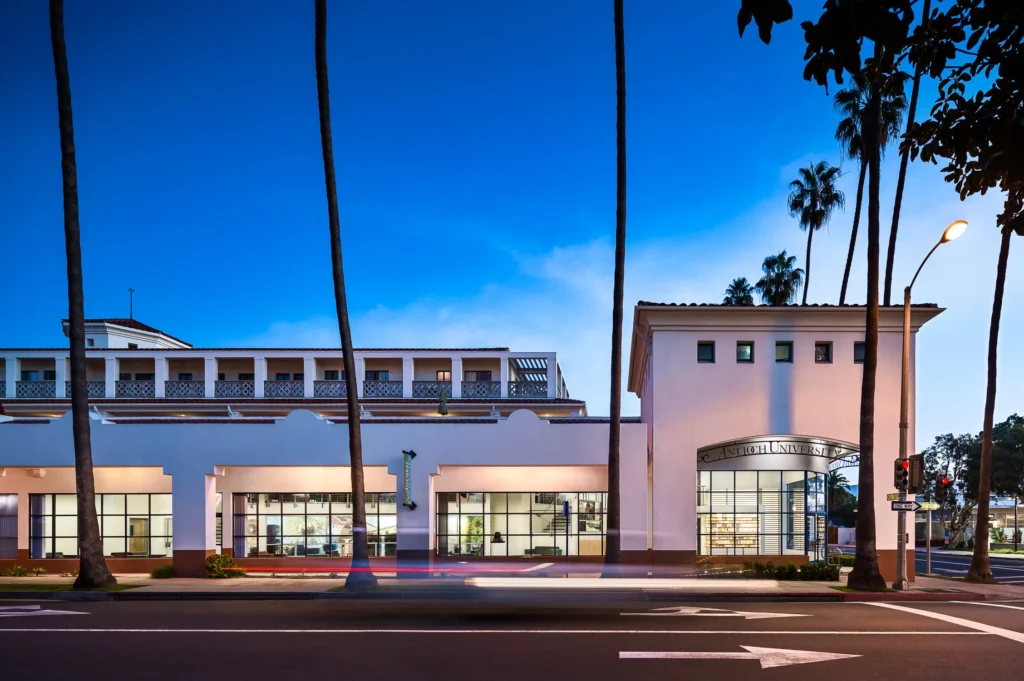
Antioch University’s Psychology programs help you grow beyond a career-focused professional. The programs encourage passionate learners who want to improve lives of individuals, couples, and families in a variety of backgrounds. Students who join Antioch’s psychology community find themselves among compassionate, motivated peers and professors. These educators work hard to address increasingly diverse populations’ needs.
The School of Counseling, Psychology, and Therapy lets you refine your expertise in many specializations. The programs give you tools to address societal inequalities. You’ll learn to promote mental health as a human right and support marginalized communities.
Antioch University New England’s Department of Applied Psychology provides guided hands-on learning. Students train to become counselors, therapists, educators, supervisors, and researchers serving diverse communities. Social justice is the foundation of all psychology programs at Antioch. This dedication to social justice runs through the whole institution. Faculty members create a multicultural environment that promotes equality in mental health.
Antioch University New England is recognized for producing many of the finest mental health professionals in New England and nationwide. The university achieves this through a unique approach to psychology education that has:
- Active discussions with faculty-practitioners who challenge your thinking
- Study of mental health practitioners’ role in society and global context
- Space that encourages both professional and personal growth
- Creation of your personal philosophy of psychological, social, and cultural change
Students at Antioch experience practical learning in all Department of Applied Psychology programs. You’ll practice what you learn through practica and internships near home that serve the community. The faculty members teach and maintain active practices outside class. They bring current care standards and new developments into their courses because they work in the field and join regional and national organizations.
Antioch University makes use of hands-on learning, internships, research studies, outreach projects, and other activities to improve your education. This method combines challenging academic coursework with real experience to give you detailed training for creating lasting change.
The Clinical Psychology Department at Antioch University New England runs three special centers benefiting students: the Psychological Services Center, the Multicultural Center for Research and Practice, and the Center for Behavioral Health Innovation. These centers are a great way to get practical experience while helping the community.
The university’s excellent faculty and core team members are a strong positive aspect of their programs. Many faculty members keep active clinical practices. This ensures your learning stays relevant to the profession’s current needs.
Programs offered
Antioch University has excellent psychology programs at every academic level. These programs come with specialized focuses to prepare students for different career paths in mental health and psychological services.
The Master of Arts in Clinical Psychology program at Antioch University Los Angeles features a rich selection of specializations. Students can complete this 90-quarter credit program in eight full-time quarters or 16 part-time quarters. The program offers eight distinct specializations:
- Addiction and Recovery
- Applied Community Psychology
- Child Studies
- General Practice
- LGBT-Affirmative Psychology
- Professional Clinical Counselor
- Psychological Trauma Studies
- Spiritual and Depth Psychology
Each specialization has a well-regarded curriculum that meets the growing need for clinicians with expertise in specific areas. The Spiritual and Depth Psychology Specialization includes 17 units of integrative psychotherapy and encourages students to maintain a mindfulness practice.
Antioch University Santa Barbara’s MA in Clinical Psychology program helps students become Licensed Marriage and Family Therapists (LMFT) or Licensed Professional Clinical Counselors (LPCC). The program takes a comprehensive approach that emphasizes authentic relationships and understanding diverse identities through community-based learning. Students can pick optional concentrations in Latinx Mental Health or Somatic Psychotherapy.
Students looking for doctoral education can choose Antioch University Seattle’s PsyD in Clinical Psychology. This program prepares students for professional and health service psychology practice. It uses a competency-based system that focuses on multicultural competency and social justice concepts. The American Psychological Association has accredited this curriculum, which students can complete in five years with full-time, year-round study.
The university also offers several undergraduate options. Santa Barbara’s BA in Psychology builds a strong foundation in psychological theory and research, requiring 180-200 quarter credits. Seattle’s BA in Health Counseling and Psychology serves as an applied completion program for students interested in wellness and mental health.
The School of Counseling, Psychology, and Therapy operates through five divisions: Creative Arts Therapies, Clinical Psychology (PsyD), Counseling, Relational Therapies, and Applied Psychology. This structure provides thorough coverage of psychological disciplines and therapeutic approaches.
Online options
Antioch University’s online psychology programs give you flexible learning paths. Students can now learn without having to be physically present on campus. The university offers in-person, hybrid, and fully online courses that match your priorities.
The online Master of Arts in Clinical Mental Health Counseling is a standout distance learning program. Students need to attend just two one-week campus immersions during their entire study period. You’ll find both synchronous and asynchronous learning components in the curriculum. Synchronous sessions let you participate with instructors and peers in real-time. The asynchronous courses give you freedom to study independently without scheduled meetings.
The New England campus offers two options for Clinical Mental Health Counseling students: a fully online format with two week-long intensive residencies, or a weekend low-residency format at the Keene, NH campus. This setup will give a way to pursue advanced psychology education while keeping your current commitments.
Success in these programs depends on good time management. Online students typically spend nine hours per course each week. They also need 20 additional hours at clinical sites during practicum and internship semesters. Field experience is vital—students complete their practical work in local communities, and many choose weekend hours to fit their work schedules.
The reliable infrastructure behind your online learning has both Sakai and Engage Learning Management Systems. These platforms help you access course materials, turn in assignments, and join discussions with faculty and peers.
Antioch’s online programs come with several benefits:
- Transfer-friendly policies that accept up to 75 credits from any accredited institution or joint services transcripts
- Student support services built for distance learners
- Same high academic standards across all formats
- Scholarships and financial aid for qualified students
The Department of Applied Psychology at Antioch University New England makes core courses available online. Each quarter also has select asynchronous options for completely independent study without required class meetings.
This steadfast dedication to flexible education enables you to advance your career and personal goals while maintaining your current lifestyle.
Accreditation
Antioch University’s psychology programs build their credibility on rigorous accreditation at both institutional and program levels. The university has managed to keep continuous accreditation from the Higher Learning Commission (HLC) since 1927. This 96-year-old accreditation will give a guarantee that Antioch’s programs meet quality standards.
Students pursuing psychology degrees benefit from this institutional accreditation in several ways:
- They qualify for various financial aid options including grants, scholarships, and loans
- Academic institutions recognize their transfer credits
- Employers and licensing boards accept their credentials
Antioch’s specialized psychology programs boast prestigious field credentials. The Clinical Psychology Doctoral Program (PsyD) at Antioch University New England started in 1982 and holds full accreditation from the American Psychological Association (APA). The PsyD program at Antioch University Seattle also earned APA accreditation. These credentials prove both programs meet the strict standards of clinical psychology doctoral education.
The PsyD program’s quality shows through its inclusion in the National Register of Health Service Providers in Psychology’s list of Designated Doctoral Programs. This recognition adds another level of external validation.
The curriculum arranges itself according to the National Council of Schools and Programs of Professional Psychology (NCSPP) educational model. Students develop seven core competencies: relationship, assessment, intervention, research and evaluation, consultation and education, management and supervision, and diversity. This structure helps graduates master every major aspect of professional psychology.
Antioch University Santa Barbara’s MA in Clinical Psychology meets California’s Board of Behavioral Sciences (BBS) requirements for Marriage and Family Therapist (LMFT) licensure. While the program typically satisfies requirements in other states, students should check with their state’s licensing body about specific course or training needs.
Admission Requirements
Antioch University’s psychology programs have specific admission criteria that vary by degree level. The university assesses candidates based on their academic performance, clinical potential, and dedication to social justice.
Students need a Bachelor’s degree from a regionally accredited institution with a minimum 3.0 GPA to qualify for most psychology programs. Your application might still be considered with a lower GPA if you submit a letter that explains your circumstances and describes how you’ll succeed in graduate studies.
Both Seattle and New England PsyD programs require three prerequisite courses with B grades or higher:
- Abnormal Psychology
- Developmental Psychology
- Introduction to Statistics
Students who earned their undergraduate psychology degrees from regionally accredited institutions usually don’t need Abnormal and Developmental Psychology courses. Statistics remains a requirement for everyone. Your prerequisite coursework should be less than ten years old.
Each program has slightly different application requirements. The basic materials include an online application form and official transcripts from all previous colleges and universities. You’ll need two recommendation letters from qualified individuals who can assess your graduate study readiness—usually social science professors or work supervisors. A complete résumé or curriculum vitae should detail your relevant experience and qualifications.
The PsyD program requires specific essays. Personal essays (300-500 words each) should cover your academic background and life experiences. Additional analytical writing essays (400-600 words each) help showcase your critical thinking abilities.
The admissions committee reviews applications in several stages. They start by evaluating written materials. Selected candidates then receive interview invitations—either individual or group sessions depending on the program. Final admission decisions reach candidates through email after successful interviews.
Different programs and campuses have their own deadlines. The New England PsyD program deadline falls on December 1st. Santa Barbara’s Clinical Psychology MA program accepts applications until August 1 for fall enrollment and January 15 for spring.
Antioch values candidates who help create a diverse student community. This includes different genders, ethnicities, ages, social classes, abilities, learning styles, sexual orientations, and professional backgrounds.
Tuition
Planning your psychology education finances at Antioch University needs careful consideration. The university charges the same tuition rates to all students, whether they’re local, from other states, or international students.
Seattle’s PsyD in Clinical Psychology program costs $1,104 per credit. Students need to complete 140 credits. New England’s Clinical Psychology doctoral program has a different payment structure. First-year students pay $18,725 each semester for fall and spring. Years 2-4 cost $15,228 per semester for fall and spring, plus $8,351 for summer semesters.
The MA in Clinical Psychology at Los Angeles costs $920 per credit. Seattle’s MA in Counseling with Clinical Mental Health Counseling concentration has two options. The weekend format costs $944 per credit, while the low-residency option costs $840 per credit. Both these programs need 60 credits to graduate.
Art therapy specializations have their own rates. The Art Therapy and Clinical Mental Health Counseling MA (online) costs $840 per credit for a 66-credit program. Students also pay a $149 fee for each of the two residency weeks.
Students need to budget for several other fees:
- Technology fees: $75-125 per term depending on campus
- Student services/activity fees: $5-115 based on enrollment status
- Liability insurance: $15-75 per semester for psychology students
Your education is a major investment. Antioch’s Admission Counselors and Financial Aid Team can help you explore financial options. Most programs let you set up payment plans with a $40 application fee per quarter.
Doctoral students studying full-time should plan for $15,000-19,000 per semester. Master’s students typically spend between $8,000-11,000 per term, depending on their credit load and program choice.
Additional Information
Antioch University goes beyond regular academic programs by offering outstanding resources through its campus-based counseling centers. These facilities help communities get affordable mental health services while giving psychology students supervised clinical experience.
The Community Counseling and Psychology Clinic in Seattle has trained student therapists who offer sessions starting at $0.00 on a sliding scale. This makes mental health support available whatever your financial situation. The Antioch University Counseling Center in Los Angeles also serves a variety of populations, including international communities, LGBTQIA+ individuals, and seniors.
Students complete their doctoral training with a clinical internship that requires 1500-2000 hours of advanced clinical work. Antioch University Seattle works with the Association of Psychology Postdoctoral and Internship Centers (APPIC) match program to connect students with quality internship placements. The Seattle PsyD program stands out as Washington state’s only APA-accredited Clinical Psychology doctorate.
Antioch’s faculty members receive detailed benefits including:
- Health, dental, and vision plans
- Employer retirement contribution of 6%
- Paid life insurance and short-term disability
- Tuition remission for employees and dependents
Teaching faculty typically handle 36 quarter credits of direct instruction across four quarters. Many courses are delivered through Zoom in evening formats. Starting salaries range from $63,000 to $69,300 based on location and qualifications.
Antioch University continues its steadfast dedication to workforce diversity and non-discrimination principles. The university proudly partners with Employers of National Service and welcomes applications from AmeriCorps and Peace Corps alumni.