
UC Riverside Psychology Programs
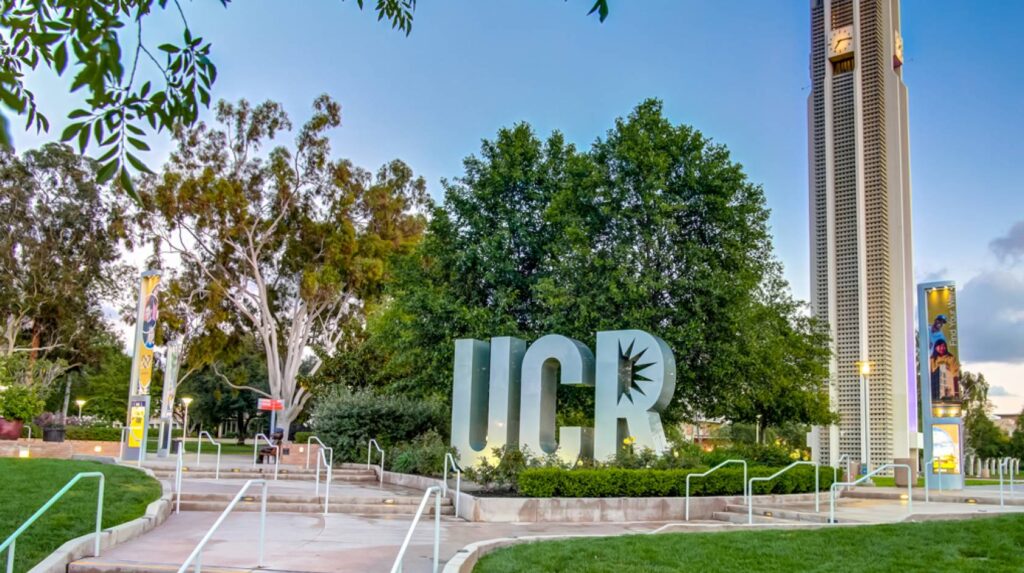
UCR’s Psychology Department stands out with its blend of research excellence and detailed education. Students benefit from multiple research facilities and specialized study areas that lead to successful careers in psychology fields of all types.
The psychology graduate program at UCR heads over to four main areas: Behavioral Neuroscience, Cognition & Cognitive Neuroscience, Developmental Psychology, and Social/Personality Psychology. Students can also specialize in Quantitative Psychology, Health and Well-Being Psychology, and Diversity and Inequality Psychology. This setup helps students gain expertise in specific areas while working with other disciplines.
US News & World Report’s 2023 rankings place UC Riverside’s psychology program at #81 nationally, with its undergraduate program at #80. Psychology graduates make up about 11% of UCR’s student body and start their careers with an average salary of $53,416.
The Behavioral Neuroscience program delves into cortical processing and plasticity through animal models. Students learn everything from sensory perception to higher cognitive functions. The program connects with the Interdepartmental Neuroscience Graduate Program, letting students work with faculty who specialize in cellular and molecular research.
Students in the Cognition and Cognitive Neuroscience (CCN) program learn about attention, memory, motor control, speech, language, and perception. Faculty members combine behavioral techniques with computational modeling and neuroscience methods like EEG/ERP and neuroimaging.
Developmental Psychology takes a whole-life view with research that spans from infancy to older adulthood. Faculty members study attention, learning, emotion regulation, and academic achievement through various research approaches including cross-sectional and longitudinal studies.
The Social/Personality Psychology program has earned national recognition for its work in diversity, inequality, health, and well-being. Research happens everywhere – from labs to classrooms to community settings.
Students have access to great resources. These include statistical software packages (SPSS, SAS, LISREL), the Graduate Quantitative Methods Center, and the UC Riverside Center for Advanced Neuroimaging. The neuroimaging facility features a cutting-edge 3T Siemens Prisma MRI scanner and MRI-compatible 64-channel EEG system.
More than 20 active research labs cover specialties ranging from the Adversity and Adaptation Lab to the Youth Health and Development Lab. Undergraduates can earn up to 4 units each quarter through hands-on lab work.
The department maintains a 22:1 student-faculty ratio, which creates meaningful mentorship opportunities. Students thrive in this environment that combines structured academic programs, research facilities, and faculty expertise for both academic and professional paths.
Programs offered
UC Riverside’s Psychology Department helps students advance their careers and education through various academic paths. Students can choose from multiple degree options at both undergraduate and graduate levels. Each program aligns with specific educational and career goals.
Students have the option to earn either a Bachelor of Arts (B.A.) or Bachelor of Science (B.S.) in Psychology. The B.A. program gives students broad exposure to basic psychological knowledge and research methods. The B.S. degree builds on this foundation and emphasizes research methodology, theory, and hands-on lab experience.
UCR goes beyond traditional psychology degrees by offering interdisciplinary options that blend psychological principles with other fields. Students pursuing a Neuroscience degree (B.A. or B.S.) head over to study nervous system functioning at multiple levels—from molecular and cellular to behavioral and cognitive. This program covers neuroanatomy, neurophysiology, and neurochemistry in humans and animals. The Psychology – Law & Society B.A. combines psychological study with an integrated approach to legal relationships and institutions.
The university’s research-oriented Ph.D. program spans four specialized areas:
- Behavioral Neuroscience
- Cognition and Cognitive Neuroscience
- Developmental Psychology
- Social/Personality Psychology
Graduate students can tailor their education through three additional subfields:
- Quantitative Psychology
- Health and Well-Being Psychology
- Diversity and Inclusion Psychology
Students who want to explore multiple areas can create tailored programs that combine elements from different specializations. Those studying Diversity & Inequality Psychology take extra courses in psychology of race and stereotyping, and complete a relevant research project.
The department supports both undergraduate and graduate students with peer mentors and faculty guidance. Students join learning communities, internships, and research opportunities from their first year. These experiences are a great way to get real-world skills. Graduates find success in academic institutions, research institutes, government health and social service agencies, and corporate research firms.
Note that UC Riverside doesn’t offer terminal master’s degrees or training in Clinical, Counseling, Educational, or School Psychology. The university’s detailed offerings across 150+ majors and minors give research-focused psychology students many paths to reach their academic and career goals.
Online options
UC Riverside’s online learning has changed by a lot. Students now have flexible education options that work alongside regular classroom learning. The numbers tell an impressive story – 97.70% of UCR students (25,825 students) took at least one online class during 2019-2020, and 88.89% (23,497 students) completed all courses online. These numbers show remarkable growth from 2015-2016 when only 21 students took online classes.
Almost every undergraduate student at UCR (99.98%) took at least one online course in 2019-2020. Most of them (97.46%) chose to study completely online. Graduate students also took well to online learning. Out of 3,741 graduate students, 83.85% enrolled in at least one online class while 36.86% studied exclusively online.
UCR has a reliable online system throughout the university. However, it doesn’t offer dedicated online degree programs for psychology students yet. Psychology students can still take individual online courses to support their in-person classes.
Students can earn academic credits through UCR’s distance abroad program. This program lets psychology students study in countries like Russia, Italy, and Thailand. They can even study in other U.S. locations like New York City.
Psychology students at UCR can now access remote internships, especially since many organizations created work-from-home options during COVID-19. The university’s career center works with Parker Dewey to provide micro-internships. These short-term professional projects help students gain practical experience and learn about possible career paths. Research labs sometimes allow remote work that includes literature reviews, survey creation, and data analysis.
Some psychology students might qualify for the Virtual Student Federal Service (VSFS). This program offers an 8-month unpaid remote internship where students work about ten hours weekly on government projects. These remote options help UCR psychology advisors suggest learning paths that fit each student’s needs.
While UCR doesn’t currently offer formal online psychology degree programs, students still have various online and remote learning choices to make their education more flexible.
Accreditation
Quality assurance in psychology programs relies on accreditation. Your education must meet professional practice and licensure standards that recognized accrediting bodies review. These bodies look at program curricula, faculty qualifications, and student outcomes.
UC Riverside’s Ph.D. program in School Psychology stands tall with impressive credentials. The Graduate School of Education (GSOE) houses this only doctoral-level school psychology program in Southern California with American Psychological Association (APA) accreditation. On top of that, it earned approval from the National Association of School Psychologists (NASP), which gives graduates a dual-certification advantage.
The program’s excellence shines through its 19-year old APA accreditation. A major milestone came in November 2019 when the program received APA’s maximum possible 10-year reaccreditation. Program director Austin Johnson speaks to this achievement: “We take this success as a reflection of the dedication and hard work of our program’s faculty, students, and administrative support staff”.
UCR’s School Psychology doctoral program holds elite status as one of just three APA-accredited programs in California. This rare distinction highlights the program’s high standards and steadfast dedication to psychological education.
The program’s results speak volumes about its success. This is a big deal as it means that during its coverage year, all students matched with internships through the Association of Psychology Postdoctoral and Internship Centers. These placement rates surpass national averages and showcase how well the program prepares students.
Each UCR psychology program has different accreditation credentials. Students should talk with UCR psychology advisors about their chosen program’s specific accreditation details. Keep in mind that accreditation often determines both education quality and professional licensure eligibility.
Admission Requirements
Students must meet specific academic criteria to enter UC Riverside’s psychology programs at both undergraduate and graduate levels. The requirements differ between programs. UCR psychology undergraduate programs need a minimum 2.7 GPA in all UC-transferable coursework. Students also need at least a 2.5 GPA in their major preparation courses. Each major preparation course requires a grade of ‘C’ or better.
Transfer students can use ASSIST.org to find the exact prerequisites for their chosen major. This tool helps California community college students match their courses with UCR requirements.
The B.S. in Psychology program sets higher standards than the B.A. track. Students must complete PSYC 1, 2, 11, and 12 with a B- or better in their first attempt. Meeting these requirements doesn’t guarantee acceptance. The B.S. program selects only a small group of research-focused students. Most successful applicants have GPAs above 3.0.
B.A. Psychology majors who qualify will get application details from their academic advisors. This happens during the first two weeks after completing required courses. Students need to submit a B.S. Application form that explains their career goals and how the B.S. degree fits those goals. They must also include their unofficial UCR transcript.
Graduate admissions at UCR demand high standards. Students should check they’re applying to the right program and term before starting. Applicants with a 3.5 GPA or better in overall or major coursework get admitted more often. The GRE requirement no longer exists starting from Fall 2023 admissions.
Graduate applications must include:
- Transcripts from all post-secondary institutions
- Statement of Purpose and Personal History Statement
- Current CV/Resume (strongly recommended)
- Three letters of recommendation from professors/research supervisors
International students from non-English speaking countries need to submit language test scores. TOEFL scores must be at least 80 for iBT, while IELTS needs an overall score of 7 with no section below 6. Test scores must be less than two years old at enrollment time.
UCR psychology advisors help students understand program requirements. Graduate applications for Fall 2026 opened on September 5, 2025. Students should talk to advisors early in their academic career to build a strong application.
Tuition
Your psychology education at UC Riverside requires careful financial planning. The university’s Tuition Stability Plan sets tuition rates for each new undergraduate class. These rates stay the same until graduation for up to six years. Students who started in fall 2021 or earlier keep their current rates throughout enrollment.
Undergraduate California residents pay $11,834 in tuition and $2,336 in fees each year. Out-of-state undergraduate costs are much higher at $42,611, plus the same $2,336 in fees. These costs cover UC tuition, campus fees, and student health insurance.
Graduate programs have different fee structures. California resident graduate students pay $6,970.83 each quarter. Non-resident graduates pay $19,030.83 quarterly. These amounts include UC tuition, student service fees, campus fees, and graduate health insurance.
UCR makes education more affordable through extensive financial support. The numbers tell a compelling story – 85% of UCR undergraduates who asked for aid received it. Even better, 97% of these students got need-based scholarships or grants. Scholarships help reduce both tuition costs and student loan debt. UCR students who take federal loans graduate with an average debt of $21,500 – just one-fifth of what they would pay for tuition and housing.
Students can access several grant options. Cal Grant A offers between $100 and $12,630 per academic year. Cal Grant B provides $100 to $14,302 annually. Graduate students can get funding through fellowships, Teaching Assistant positions, and Graduate Student Researcher roles. These often include stipends and cover tuition.
The university states that tuition and fees remain fixed whatever the instruction method. No refunds apply if classes move online. You can estimate your costs and potential aid using UCR’s Net Price Calculator. UCR psychology advisors can give you specific financial guidance based on your situation.
Additional Information
UCR Psychology students have access to detailed resources that boost their academic and professional growth beyond regular classes. Students can get great career guidance through the Career Center’s services with virtual and in-person drop-in advising across from Skye Hall. Students who submit their Letter of Intent to Register gain access to Handshake – a vital job platform – after two weeks.
Students can earn up to 4 units per quarter by working in research labs. The department runs over 20 active research labs in a variety of specialties from the Adversity and Adaptation Lab to the Youth Health and Development Lab.
Students can work remotely through the Virtual Student Federal Service program, which offers 8-month unpaid internships with federal agencies. The EXCEL+ Career Readiness program helps students express skills they gained from coursework and activities.
UCR’s alumni network keeps graduates connected effectively. Career Center services extend automatically for new graduates by one year after completion. Several tools help students explore potential careers:
- Strong Interest Inventory (SII)
- Myers-Briggs Type Indicator (MBTI)
- CareerLeader (USD 20)
- Focus 2 (free)
These resources help UCR psychology students transition smoothly into their professional careers.